
Who is Marchosias Demon in the Lesser Key of Solomon, Rituals for Protection & Fortitude everything you need to know.
The Marchosias demon, known as the thirty-fifth spirit in the Ars Goetia, is described as a powerful Marquis who commands thirty legions of spirits.
In traditional demonological texts, he is portrayed as a formidable presence with strong authority and a disciplined nature.
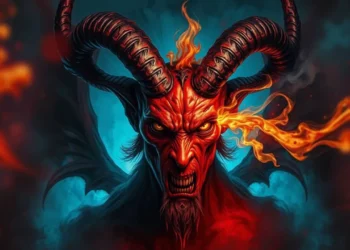
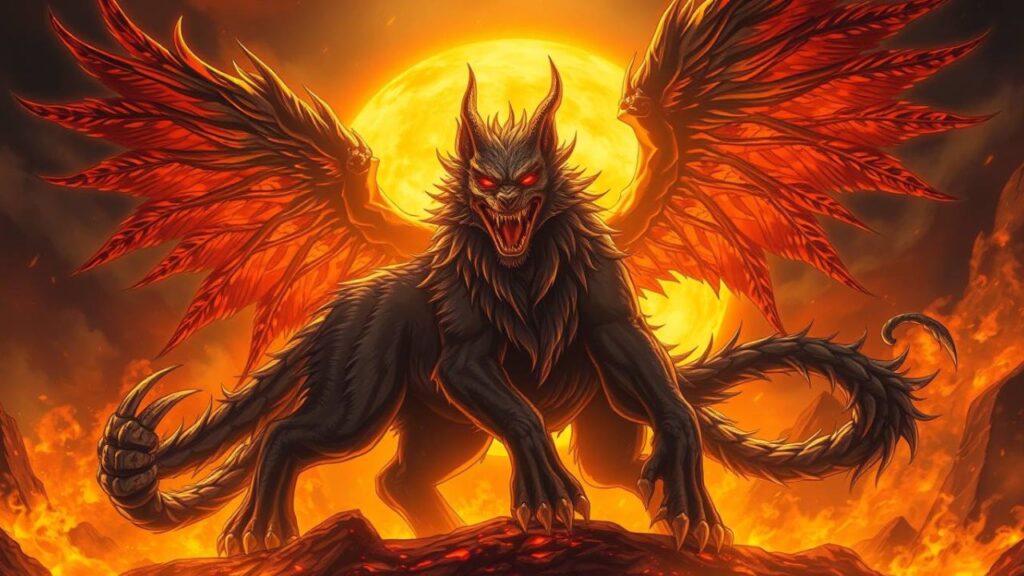
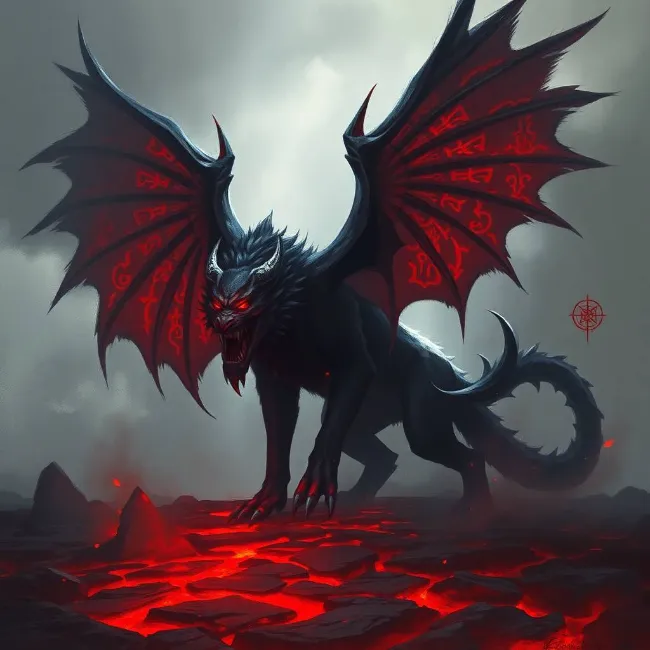
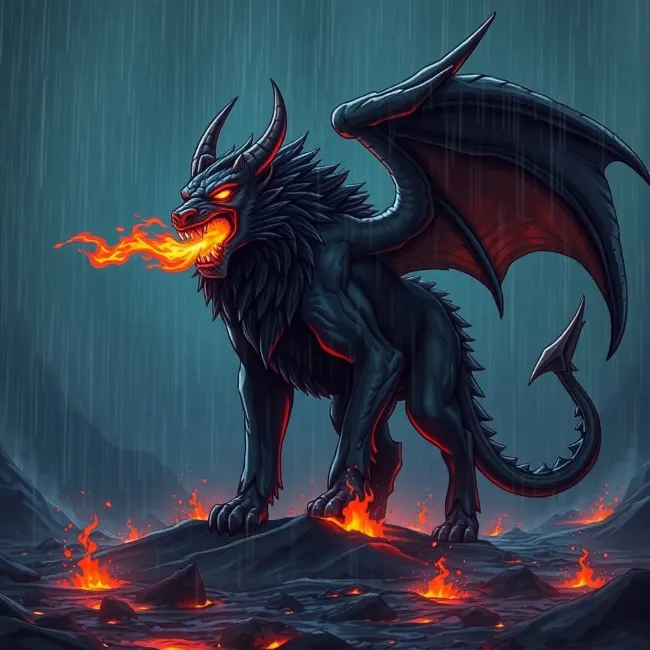
According to the old grimoires, the demon Marchosias first appears in a striking and intimidating form. He manifests as a wolf with the wings of a griffin, a serpent-like tail, and flames coming from his mouth.
However, when commanded by the practitioner, he can take on a human appearance. This transformation reflects an important aspect of his nature.
The Marchosias demon represents both raw, untamed ferocity and controlled strength, showing that his power can move between wild destruction and disciplined force.
Many accounts suggest that when the Marchosias demon is invoked, the surrounding atmosphere can noticeably change.
Practitioners often describe a shift in energy that affects the body and mind.
The heart may start beating faster, muscles can feel tense, and fear sometimes fades into a powerful surge of courage, similar to the mindset of a warrior preparing for battle.
Historical texts also mention that the Marchosias demon once belonged to the angelic order known as the Dominations.
Despite his current infernal position, he is said to hope for redemption and a return to heaven after twelve centuries.
This belief adds an unusual depth to his character. Even in his demonic form, the Marchosias demon is often described as carrying a sense of honor and nobility, which some practitioners claim can be felt during ritual encounters.
Who Is Marchosias Demon?
The most common source of information about the Marchosias demon is “The Lesser Key of Solomon,” a seventeenth, century grimoire that is a compilation.
This highly influential work plays a big part in determining how we see the seventy, two spirits of the Ars Goetia today.
The Marchosias demon in this spirit circle is a strong member of the hierarchy a Hell Marquis of rank who governs thirty legions of spirits, thus making him one of the most powerful entities described in this tradition.
The Marchosias demon in the grimoire has an extremely striking and unforgettable look. In the first throat of a big wolf, he will reveal himself to the seer. It is a mysterious creature with griffin wings and a serpent tail.
It is said that he breathes fire, which only makes his face more dramatic. On the other hand, the Marchosias demon is said to be able to speak with a normal, coherent human voice.
He is a being whom, when treated personably and with dignity, is reputed to give straightforward and honest answers to questions.
One of the reasons that set the Marchosias demon apart from other spirits mentioned in Ars Goetia is his reputation for honor.
The text refers to him as devoted to the magician who calls him and ready to give truthful answers rather than deceiving ones. Such faithfulness is quite exceptional among the infernal spirits listed in the old grimoires.
Besides that, Marchosias demon is quite captivating by the fact that he even speaks of repentance.
The text mentions that he expresses the desire to one day be accepted again in Heaven and among the angels after a lapse of twelve hundred years.
In a series mainly of spirits who are even thought to have been rebellious, disorderly, or egocentric, the wish to be restored Marchosias demon sets him apart and gives him an almost noble character.
The etymology of the name Marchosias is typically traced back to Latin. A number of scholars argue that it should derive from the term marchio, denoting a marquis or a lord in charge of the defense of the borders of a kingdom.
This explanation harmonizes nicely with the Marchosias demon’s symbolic aspect, who seems to embody the concept of being a mediator between different worlds.
In fact, the demon may be portrayed as a fighter, a guardian of borders, and a character hanging between revolt and salvation.
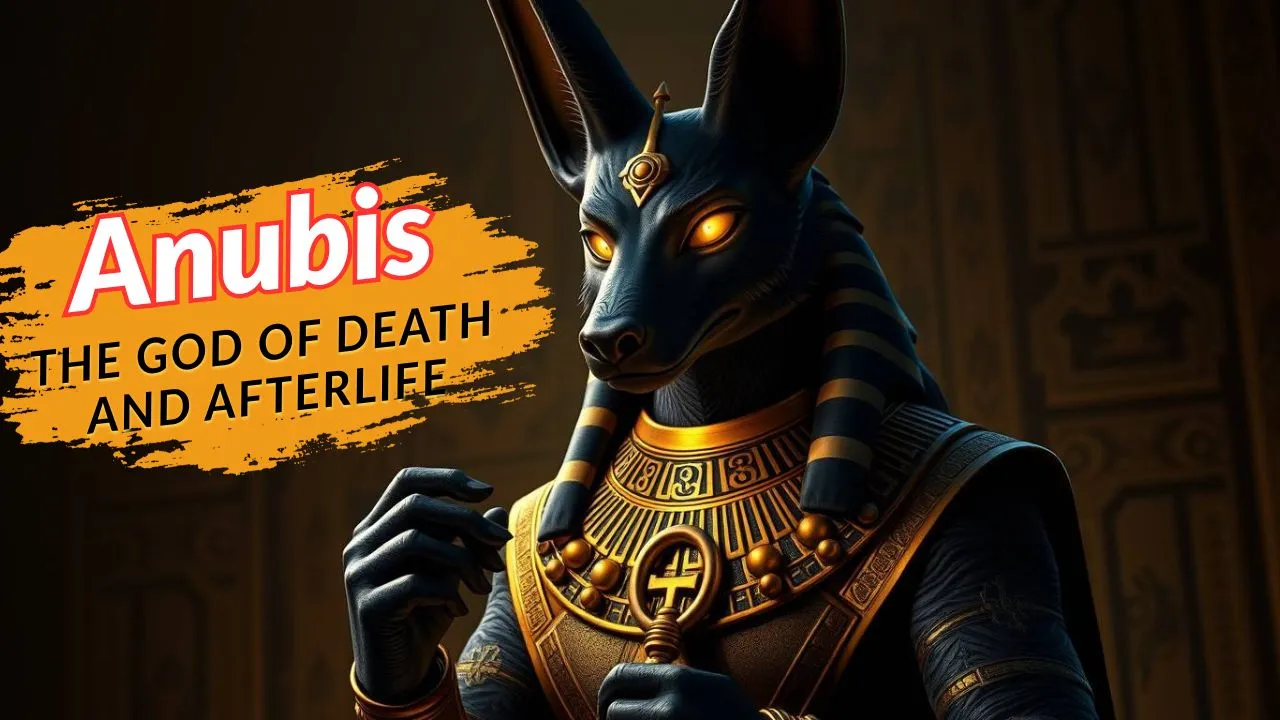
Read : 2 Most Powerful Anubis Summon Ritual guide to working with the God of Death and Afterlife
Symbolism and Meaning of Marchosias
When you begin exploring demonology in depth, it quickly becomes clear that many spirits carry symbolic and psychological meanings beneath their traditional descriptions.
The Marchosias demon is especially rich in this regard. He often represents the tension between instinct and higher purpose, between raw earthly energy and spiritual aspiration.
Themes of rebellion and loyalty are also closely tied to his character. Because of this, the Marchosias demon can resonate strongly with people who feel they are standing at a turning point in life or balancing different parts of their identity.
The Wolf as Archetype
The wolf form associated with the Marchosias demon is deeply symbolic. Throughout history, wolves have represented fierce independence, primal strength, and strong loyalty to their own group.
They exist at the edge of the wilderness and the human world, a place that inspires both respect and fear. In a similar way, the Marchosias demon carries an energy often linked to courage, intensity, and resilience.
Wolves are also known for their intelligence and protective nature toward their pack. Because of this symbolism, many practitioners view the Marchosias demon as a guide in understanding loyalty and personal alliances.
His symbolism can highlight the difference between loyalty that is genuine and loyalty that may be misplaced or taken advantage of.
A Fallen Angel with a Warrior’s Spirit
Traditional texts claim that the Marchosias demon once belonged to the angelic Order of Dominations. This group of angels is often associated with leadership, authority, and maintaining order among celestial beings.
Knowing this background adds another layer to the identity of the Marchosias demon. Rather than representing pure chaos, he is portrayed as a being who once embodied discipline, structure, and responsibility.
His fall from Heaven echoes the broader myth of fallen angels, yet the Marchosias demon is also described as holding onto the hope of eventually returning to the divine realm.
This detail gives him a unique character among Goetic spirits. The combination of strength, regret, and aspiration creates a powerful archetype for those who struggle with their own internal conflicts or personal transformation.
Loyalty and Inner Strength
Loyalty is one of the strongest qualities linked to the Marchosias demon. In traditional accounts, he is described as remaining faithful to the magician who summons him and carrying out tasks with sincerity.
This reputation stands out because many spirits in older grimoires are often portrayed as deceptive or unpredictable.
Because of this trait, the Marchosias demon is sometimes associated with the development of willpower and courage. His symbolism reflects determination and decisive action.
For those seeking to strengthen their resolve during challenging situations, the presence connected with the Marchosias demon is often described as bold, focused, and supportive, helping push aside fear, hesitation, and doubt.
Origins and Mythological Background
The Marchosias demon belongs to the broader group of spirits whose identities have been formed through hundreds of years of religious and cultural changes.
In fact, most of the entities mentioned in the Ars Goetia are thought by experts to have ancient roots.
For instance, these persons could have been associated with gods of old, deities of a place, or guardian spirits which, over time, changed into figures of evil as Christianity took over Europe and the Mediterranean region.
Furthermore aspects of the Marchosias demon, including its name and the symbolism linked with it might in a very subtle way, reflect these old sources and traditions.
Potential origins of the name
The name linked with the Marchosias demon has been the subject of study of historians and occult text researchers. Some scholars think that it could be derived from a Late Latin word related to noble or military ranks.
During medieval times in Europe, the term ‘marquis’ was a noble title of a person who ruled and defended the border areas of a kingdom.
This association is very much in line with the symbolic function of the Marchosias demon which is frequently highlighted. In fact, in a lot of cultural understandings he is a spirit who is related to limits and edges.
For him not belonging entirely either to one or other realms, the Marchosias demon is actually in between worlds, and it is the duality of war vs. peace that gets reflected in both of his aspects.
Other hypotheses refer to ancient Mediterranean practices of venerating wolves or employing wolf as an emblem in the military. The idea is in tune with the figure depicted in the grimoires although there is no solid evidence that is strictly historical.
The wolf among many ancient civilizations was a symbol of power, protection and the enigmatic area between human society and nature, thus imitating human behavior.
These attributes are very significantly related to the iconography of the Marchosias demon.
The Fallen Angel Tradition
The fallen angel idea stems from early religious writings, especially the Book of Enoch and subsequent interpretations of the Book of Genesis.
These accounts tell about angels who disobeyed the divine law and were expelled from the heavens.
Gradually, many spirits mentioned in the grimoires were interpreted by means of this storyline.
It is the fallen angel tradition that the Marchosias demon is frequently associated with. Yet he is set apart from a number of other spirits by the fact that he desires to be admitted back to Heaven after an extremely long time.
This factor introduces an element of profundity into his narrative.
Marchosias demon might be depicted as embodying the discord and at the same time the intent for amends, a potent and double motif that, owing to its complexity and richness, has fascinated historians, occult scholars, and practitioners even today.
Read : 3 Most Powerful Ritual for Working with Lucifer
How to Summon Marchosias
The Marchosias demon is often associated in occult traditions with courage, protection, emotional strength, and sometimes acts of retribution.
In ceremonial practice, different rituals are described for connecting with the energy attributed to the Marchosias demon.
One commonly shared ritual focuses on invoking courage and protective strength.
The Iron Wolf Ritual – Calling on the Marchosias Demon for Courage and Protection
This ritual is traditionally intended to awaken inner bravery, remove fear, and symbolically surround the practitioner with the fiery protective force linked to the Marchosias demon.
Preparatory Phase
The ritual is often performed on a Tuesday, a day associated with martial energy and determination.
Before beginning, practitioners traditionally keep a light fast and engage in physical activity such as push-ups, running, or shadowboxing.
The purpose of this preparation is to awaken the body and stir the strong, disciplined energy associated with the Marchosias demon.
After the exercise, a cold shower or bath is taken to clear the mind and sharpen focus. Once this is done, the practitioner enters the ritual space calmly and with confidence.
Temple Setup
The ritual space is arranged with symbolism connected to fire and strength.
Direction: South, representing the element of fire
Altar: Covered with a red cloth, with the sigil associated with the Marchosias demon placed at the center
Candles: Two red candles and one black candle
Incense: Dragon’s blood mixed with cinnamon
Offerings: Red wine along with bread or meat briefly passed through flame
Crystals: Four red jasper stones placed around the altar in a square formation
These elements are meant to create a focused atmosphere aligned with courage, protection, and the martial symbolism linked to the Marchosias demon.
Opening the Circle
The practitioner takes a ritual blade, often called an athame, in the dominant hand and slowly walks clockwise around the ritual space. At each quarter of the circle, the blade is extended outward in a decisive motion while declaring:
“By fang and flame, I seal this circle in the name of Marchosias.”
Once the circle is completed, the blade is placed across the sigil at the altar.
Invocation
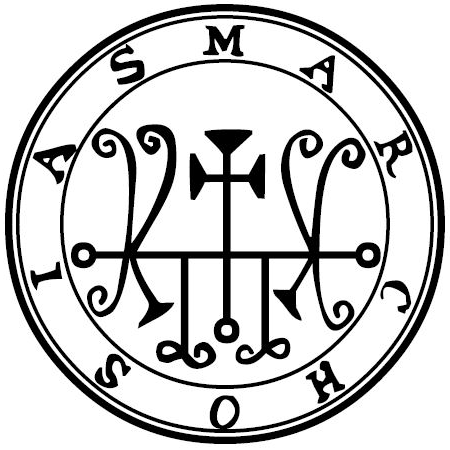
The athame is then raised upward while calling upon the presence associated with the Marchosias demon:
“Marquis Marchosias, wolf of fire, winged warrior,
I call upon your presence within this circle.
Burn away fear, strengthen my spirit,
Surround me with your fangs and guard me with your flame.”
After this, the traditional enn associated with the Marchosias demon — “Es na ayer Marchosias secore” — is chanted repeatedly while walking around the circle. With each repetition, the practitioner lightly moves the athame through the air, symbolically directing focus and intention.
Channeling the Wolf
Stand upright before the altar with the athame held against your chest. Take a moment to pause and steady your breathing. Afterwards, start inhaling deeply and exhaling forcibly.
Each time exhale, get stronger than the last. Keep going until you start to feel heat in your body and your concentration becomes crystal clear.
While you are breathing, touch the athame against your sternum softly and regularly as if you were knocking against a shield.
This will help you to fix your mind and get ready for the visualization of the Marchosias demon.
Visualize in your mind the Marchosias demon standing at the edge of the circle. It is a huge wolf with wings of fire and its eyes shine like molten metal.
The beast starts walking slowly along the boundary of the circle. Every time it takes a step, sparks fly from the ground and lines of fire light up the perimeter.
As the vision continues, the wolf makes several circuits around you. With each pass, the movement grows quicker and the flames brighter, until a ring of fire seems to surround the ritual space.
On the third circuit, the wolf stops in front of you. You meet its gaze and feel its fierce presence.
Imagine the wolf suddenly leaping forward and merging with you. In that moment, picture a surge of heat filling your chest and spreading through your body.
The symbolism represents the courage, determination, and strength associated with the Marchosias demon now becoming part of your own inner resolve.
Lift the athame with both hands, pointing the blade upward, and speak with clear intention:
“Marchosias, burn away my fear.
Strengthen my heart with fire.
Grant me courage and the power to stand strong.”
Next, walk to each quarter of the circle with deliberate steps. At every direction, plant your feet firmly and extend the blade forward while declaring a single word that represents the energy you wish to awaken:
- East – “Sight”: Visualize your awareness becoming sharp and focused, with doubt fading away.
- South – “Fire”: Imagine warmth and determination filling your chest, strengthening your resolve.
- West – “Blood”: Feel your heartbeat steady and powerful, symbolizing endurance and vitality.
- North – “Iron”: Picture your body and spirit becoming solid and unbreakable, like forged steel.
When you return to the altar, imagine these four words glowing in the air at their respective directions, forming pillars of light around the circle.
In this visualization, the ritual space becomes a fortress of strength, with the energy of the Marchosias demon symbolically standing with you at its center.
Slowly lower the athame back toward your chest and take a few calm breaths. Remain still for a moment, allowing the sense of focus and courage to settle into your thoughts and body.
To close the ritual, pour a small libation as an offering in honor of the Marchosias demon, then extinguish the candles in reverse order to signal the end of the ceremony.
Signs of Marchosias’s Presence
After the call to the Marchosias demon has been made, practitioners tend to think that different manifestations might be showing that the spirit has recognized the call.
The manifestations are pretty intangible at times and could even be totally different from the ones expected.
Nightmares are one of the easiest ways for the Marchosias demon to give off its presence. Sometimes, a wolf dream is described and there can be battle scenes or other powerful images like wings surrounded by fire.
In the realm of ordinary living, people tell that after a ritual with the Marchosias demon has been performed, changes in their self, confidence and determination become visible.
Fear and doubt, which are usually there, disappear, and people are left with courage and a stronger determination. Things that were very frightening to a person suddenly become quite normal.
There are also accounts where practitioners feel that circumstances begin to change around them. Rivals may lose their advantage, conflicts may turn unexpectedly, or challenges may resolve in surprising ways.
While interpretations vary, these experiences are sometimes viewed as signs that the influence linked to the Marchosias demon is active, encouraging strength, bold action, and a clearer sense of personal power.
Reasons People Work with Marchosias
People invoke Marchosias for a very diverse set of intentions, including:
Besides praying, some also meditate on his visual representation, using the image of the winged wolf as a means of internalizing his characteristics at the subconscious level.
Others produce various talismans or carved seals to be used as long, term safety and as a source of bravery during trying times.
These objects are used as a physical representation for the invocation of the spirit whenever the need arises.
Offerings and Presentation
In the traditional lore of the ritual practices, the Marchosias spirit is thought to answer the gift that is a symbol of strength, fire, and determination.
From the items related to iron, the offerings made out of iron most often are treated as the most suitable ones since iron is the one martial power that has always been linked to endurance.
Some very basic first things are iron nails, small blades, or even the dust or tiny pieces from a blacksmiths work which are placed nearby the altar when performing a ritual of honoring the Marchosias spirit.
Red candles are generally the first choice for the rite with the Marchosias spirit, the reason being that they symbolize fire, bravery, and energetic activity.
The atmosphere is further enhanced by the smoke of dragon’s blood, cinnamon, and crushed peppercorns that is released in the air creating an ambiance that matches the fiery and potent symbolism of which this spirit is traditionally one of the main carriers.
At times, the offerings may be a strong red wine or a dish that has been in contact with the flame, such as the meat that has been very slightly seared.
It is with these items that the energy, the strengthening, and the strongly multi, faceted nature of a few of the occult images of the Marchosias demon are intended to be portrayed.
Some practitioners also believe that gestures that express discipline and resolution have a symbolic meaning.
These could be dedicated to the Marchosias demon as a tribute to him, for example, exertion of one’s body before the ceremony, acts of courage, or significant deeds done with proper purpose.
In some cultures the sound of hitting metal against metal is a part of the offering ritual. Steel striking steel can generate a strong vibe and the lovers of Marchosias demon might consider it as a symbol that fits the fighting personality of the demon.
The main thing however in such rituals is honesty and respectful show through the power and concentrated will.
Attuning to Marchosias
To tune in to Marchosias on a very light level, a way is to put a red candle on his sigil and light dragon’s blood incense. Grab an iron nail or a small blade and while holding it in your movement start jring his enn: “Es na ayer Marchosias secore.”
Don’t stay still while chanting. Walk back and forth. Imagine that you are a wolf circling its spot, body ready, eyes wide.
Sense how fear disappears and heat in the chest as well as confidence in the eyes take place.
It is a good idea to do this before you confront someone, or at a time when courage is necessary to do a difficult task.
A simple attunement without the whole ritual can reveal the fiery side of Marchosias and be a source of strength at the time of your vulnerability.
Read : 3 Common Psychic Attack sign and Symptoms with Powerful and effective Tips to Remove Buri Nazar
Who is Marchosias Demon in the Lesser Key of Solomon Conclusion?
Whether someone views the Marchosias demon as a literal spirit, an ancient archetype, or simply a symbolic figure within demonology, his story continues to draw attention.
The Marchosias demon is often portrayed as fierce and protective, yet guided by a strong personal code.
His symbolism reflects courage in difficult moments, loyalty in situations where trust is often broken, and determination that persists even under challenging circumstances.
For those exploring the spiritual and symbolic world of the Ars Goetia, the Marchosias demon stands out as a compelling figure. Rather than representing simple extremes of good or evil, he is often associated with the space between them.
The Marchosias demon is linked with boundaries and transitional places — the grey areas where change, conflict, and personal growth take shape.
It is within these in-between spaces that many people find deeper insight about themselves.
In this sense, the symbolism surrounding the Marchosias demon can represent the journey of facing inner struggles, building resilience, and discovering strength where uncertainty once existed.