
Dante’s Inferno: A Detailed Guide to the Nine Circles of Hell and explore what sins correspond to each circle of hell?
The Inferno of Dante Alighieri, the first part of his epic poem The Divine Comedy, is an allegorical travel through the nine circles of Hell. Virgil, the ancient Roman poet, is the guide through this journey.
Here we find sins in a graded order from the mildest to the most severe, with punishments assigned accordingly. The first circle, called Limbo, is the place of the unbaptized and the pagans like Aristotle and Julius Caesar, but also of the just ones.
In the second circle, the lustful are punished by being blown about eternally by fierce winds; the gluttonous lie in execrable, icy, and filthy rain in the third; the greedy are always on the offensive clashing with each other in the fourth; the wrathful vigorously engage one another in the fifth; heretics are thrown in burning tombs in the sixth; and the violent ones undergo assorted tortures in the seventh as the circles get lower and the pains grow severer.
The eighth circle with its ten ditches filled with fraudulent sinners includes punishments such as chasing each other in circles while flogged by devils and being sunk in pitch.
The most profound and dreadful is the Nine Circles of Hell, the one for traitors frozen in a lake, which is subdivided into four rings corresponding to different kinds of betrayal-from betraying one’s kinsfolk to betraying one’s benefactors-where the likes of Judas Iscariot are immobilized in ice with the monster of Satan himself, who is there, too.
Such an elaborate design can be seen as a combination of allegory and moral lessons regarding human failings and divine justice.
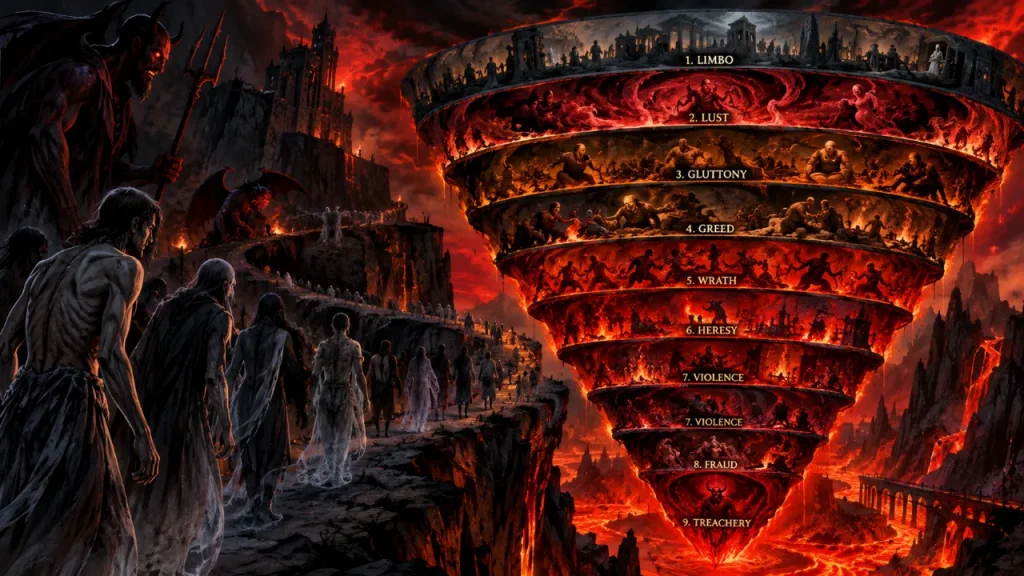
The poem became the basis for a lot of modern Hell’s illustration besides remaining a deep cultural reference for sin and punishment.
Reading the nine circles of Hell never ceases to attract readers and scholars alike, and it does so by revealing medieval theology and human psychology through a story that is timeless.
- Ante-Inferno and Nine Circles of Hell
Ante-Inferno and Nine Circles of Hell
The Ante-Inferno is the place where the souls of people who lived unnoticed and did not do any good or evil deeds are kept. They are not allowed to go to either Hell or Heaven, but they remain forever in the Ante-Inferno.
They are chased by mosquitoes and wasps, and their wounds are washed with blood and tears.
Try to picture a lifeless earth with no signs of life for miles and miles. The sky is overcast and gray, but the light it gives is pale, and it doesn’t reveal the emptiness of the land.
The land is covered with sharp stones, and the feet of the lost souls, who are wandering without direction, are also sharp and merciless.
These souls, called “neutrals,” are constantly transitioning from one state to another in the Ante Inferno. They will never experience the torment of hell nor the joy of heaven, and will remain in obscurity forever.
Their faces show acceptance and hollowness, and these expressions reflect the uselessness of their lives. Each gate resemble different sin and their punishment through the Nine Circles of Hell according to Dante’s Inferno.
A black cloud hovers over their heads and the shadows of the cloud are ever-changing on the ground. Wasps and hornets cover the skies around the dark clouds, ready to descend, and their sounds are continuous and they irritate the air.
They are the bringers of pain, these insects unrelenting in the pursuit of the suffering souls below, and they do not allow the souls to have relief from the pain as they keep stinging.
The lost souls understand their destiny, and the feeling of doom and despair take over them.
They go wandering in search of sense and goal, but all they find is emptiness and wretchedness. Ante Inferno is a sober lesson about the repercussions of living a life without virtue or vice, where one is punished to be in eternal obscurity on the verge of Hell.
What are the nine circles of hell in Dante’s Inferno?
Dante’s Inferno’ concept of the nine circles of Hell is arguably one of the most powerful and lasting images of the afterlife in the entire world literature.
The Divine Comedy, Dante Alighieri’s 14th-century poem, is a guide to a symbolic and striking journey through the dreadful depths of Hell.
The nine circles each represent different sins and punishments and are also a reflection of the Middle Ages moral philosophy and theology, Dante’s work is thus a very detailed and intricate structure.
The Italian poet shows Hell as a world ruled by divine justice and moral order, starting from Limbo (where souls wait without any hope of salvation) up to the icy center of Cocytus (where traitors are kept in eternal torture).
In his journey, led by the Roman poet Virgil, Dante not only discovers the nature of sin but also contemplates the human condition, guilt, and the search for redemption.
The nine circles of hell, in addition to being a literary guide to Hell, are also a moral allegory representing the consequences of one’s deeds.
Even after hundreds of years, Dante’s illustration of Hell still provides the source of inspiration for art, philosophy, and popular culture and is a very profound philosophical work regarding the battle between good and evil in man.
The First Circle: Limbo
Limbo is the place where the unbaptized and the virtuous pagans who were innocent but did not accept Christ reside.
It is the first circle of the Nine Circles of Hell that is more peaceful than the others and is the home of great ancient poets, philosophers, and heroes who lived noble lives but were born before the coming of Christianity.
Limbo is represented as a sad but natural fortress, covered with twilight and lacking the suffering of the lower world.
There the soul does not feel physical pain, but rather an existential punishment.
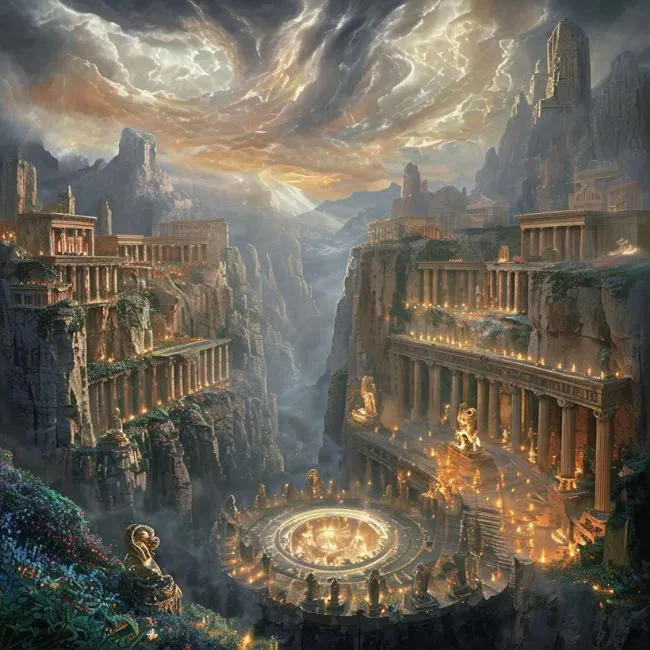
Dante locates the great poets, philosophers, and heroes of the antiquity in this circle. Homer, Plato, Aristotle, Virgil (Dante’s guide through hell and purgatory), and others are the ones who reside here.
These are the people, praised for their monumental contributions to human knowledge and culture, who lived in a time when Christianity was not yet established and widely spread.
The Void is a reflection of Dante’s intellectual and cultural admiration of the ancients and a way of linking Christian theology to the classical tradition.
The first circle of the Nine Circles of Hell indicates the intricate nature of justice and divine mercy as per medieval Christian thought and, along with it, a place where honor and tragedy are at peace, though separated from God’s love, but are not subjected to the severe punishments reserved for those who commit terrible offences against God’s law.
The Second Circle: Lust
The souls of the lustful live in eternity in a tempestuous, violent storm which keeps them apart from any leniency or rest. The punishment represents the metaphor of their deficiency of control over their bodies which were surrendered to the storm of their passions.
Dante after stepping into the second circle, meets Minos. Minos is the infernal judge who determines the destiny of the souls by wrapping his tail around the figures a certain number of times.
This portrayal brings up the subject of judicial system as well as the unalterable result of one’s deeds. Second circle resemble lust among the Nine Circles of Hell.
The souls are caught in a tempest in this circle which tears them apart, the furious winds take them up and down in all directions. Their continual torment stands for their lack of self-control in their step of earthly life and their failure to resist the call of their desires.
Now, as they were formerly the masters of their wills, they are henceforth the slaves of the storm having no hope of rest or respite.
First of all, the punishment fashioned for lust clearly mirrors the medieval conception of sin and the penalization in the afterlife corresponds to the characteristic of sin itself.
The storms that unceasingly torment the souls of the lustful are the very ones that mirror the tumultuous, aimless, and uncontrollable nature of their desires.\
The Third Circle: Gluttony
These are the gluttons who are lying in the repulsive muddy water slush that is the product of the never ending, ugly, foul, icy rains – a pretty good metaphor for their overfed lives. The dog with three heads, Cerberus, the terrifying beast, is there to hold the leash.
Third gate among the Nine Circles of Hell resemble the punishment of lying.
Once you cross the threshold of the Third Circle, you can immediately tell from the atmosphere that it is different from that of the other two circles.
The atmosphere is very dark and very dirty, and the dominating aspect of it is a ceaseless, dirty, freezing rain that is hitting the ground and people coming down from a dark and gloomy sky.
This continuous rain makes the soil into an awful muddy water which is a metaphor for the degradation and the waste that are the product of gluttony.
People who are guilty are buried in this awful muddy water, sinking and twisting, and they are powerless to get out of the mud which is symbolic of their excessive appetites.
Cerberus the terribly horrible dog of classical myths, which Dante made the patron god of gluttony, is the one who is watching this terrible and ghastly scene amongst the dead. Third gate of the Nine Circles of Hell is known for justice.
Cerberus is the representation of unquenchable hunger and each of his three heads tearing, tormenting, and howling at the soul are the images used to signify this.
His being there helps solidify the theme of gluttony and acts as an indication of riotous and uncontrolled appetites which eventually end in ruin of the souls.
The punishment of the souls of gluttons in this circle is a mirror image of their sins.
In a way similar to what they did when they were living without any restrictions or control, they are now the ones who are immersed in a disgusting mixture that is supposed to represent the excess and the wastefulness typical of the gluttonous ones.
The non-stop freezing rain is making their condition worse and at the same time, it is a metaphor for the coldness or numbness that sin causes which takes away the ability for warmth and connection from the person who sins.
The Fourth Circle: Greed
The fourth circle of the nine circles of hell holds the greedy and the wasteful who are locked in a single fight that lasts them forever.
In this fight, they push a heavy weight in opposite directions and throw insults at each other, just as they antagonized each other by hoarding or squandering their riches in life.
The people dead in this place are separated into two groups: those who kept their money and those who aborted it. Both are punished by continuously pushing big stones with their chests, a sign of the burden of greed.
Their quarrel demonstrates the futile conflict between two extremes of the same sin—greed and lack of control over wealth.
The stones stand for not only the material riches that they misused but also the spiritual weight of their guilt. Their never-ending work signifies how greed leads to an empty and futile chase for more.
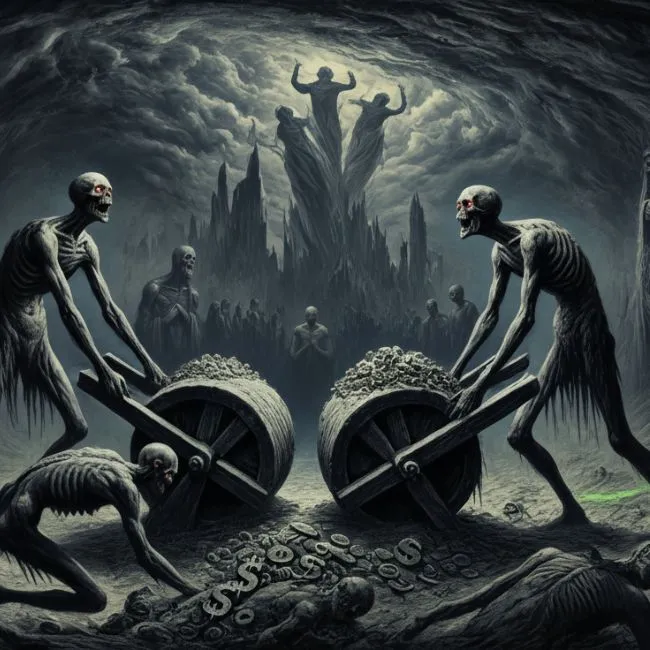
This punishment is in accordance with the law of contrapasso they suffer in a way that mirrors their sin.
A mythic guardian observes this circle, symbolizing the corruption of wealth and the consequences of material obsession. This section of the nine circles of hell warns us that greed, by either hoarding or wasting, results in nothing but spiritual downfall.
Read : How To Find Your Soulmate: 5 Powerful Signs, Tips & Spiritual Secrets
The Fifth Circle of hell: Wrath and Sullenness
In the fifth circle of the nine circles of hell, the River Styx flows. This is where it confines two types of sinners: the wrathful and the sullen.
The wrathful fight continuously on the surface of the water, hitting, biting, and scratching one another, thus demonstrating how their violent rage has become their eternal torment.
Their aggressive fights are a reflection of the violent rage they had in their lifetimes, a rage that now keeps them in an eternal state of strife with one another.
Under the black waters are the sullen, people who in life had negative emotions but chose to hide them.
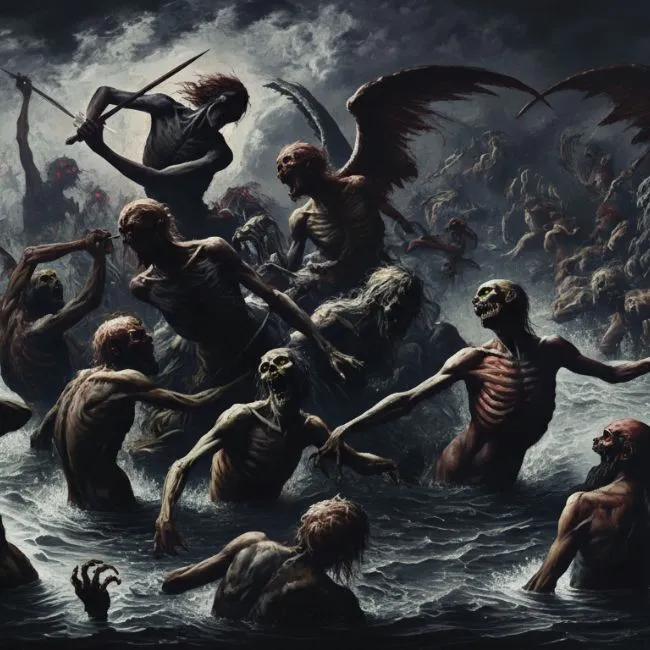
They are now kept in the abyss, imprisoned in their silence, and making only very faint, bubbling noises that sound like a sorrowful chant.
Their punishment is a reflection of their inner torment and bitterness, for their repressed anger has become the everlasting lament of their despair.
The fifth circle of hell the nine circle of hell show how both uncontrollable anger and silent resentment can ruin the human soul and lead to a state of perpetual rage and sorrow.
The river Styx in the Nine Circles of Hell itself, a classical symbol of the boundary between the living world and the underworld, here becomes a physical representation of the isolating and enveloping nature of anger.
For both the wrathful and the sullen, the Styx is a prison of their own making, reflecting their inability to move beyond their anger and find peace.
The Sixth Circle: Heresy
In Hell’s sixth circle of the nine circles, heretics are impaled in blazing coffins. These infernal caskets signify the penalty that they earn for defying the immortality of the soul.
During their existence, they asserted that death was the end; now, they are facing the reality of an eternal separation which they had denied.
Dante sees this circle as one with graves that are all ajar and shining with fire. The phantoms within are howling miserably as the flames are wrapping them.
These sepulchers will be closed up eternally after the Last Judgment, thus, cutting them off from the divine completely.
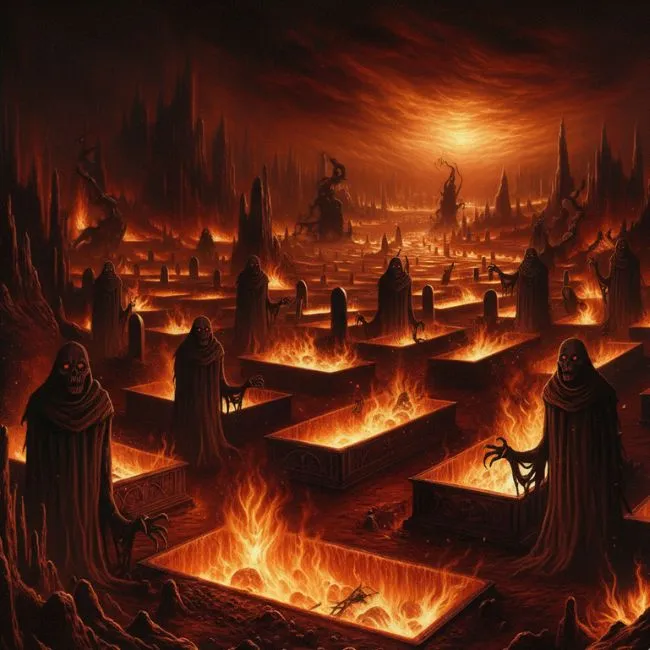
The fire and the obscurity are the symbols of their spiritual blindness as well as their rejection of eternal life.
The flames stand for the one truth from God that they stubbornly refused to admit. Their perpetual incineration is, besides being a physical torture, a spiritual one, too—the pain of being aware of their permanent separation from God’s light.
This part of the nine circles of hell demonstrates that negation of eternal life results in endless death only.
The Seventh Circle: Violence
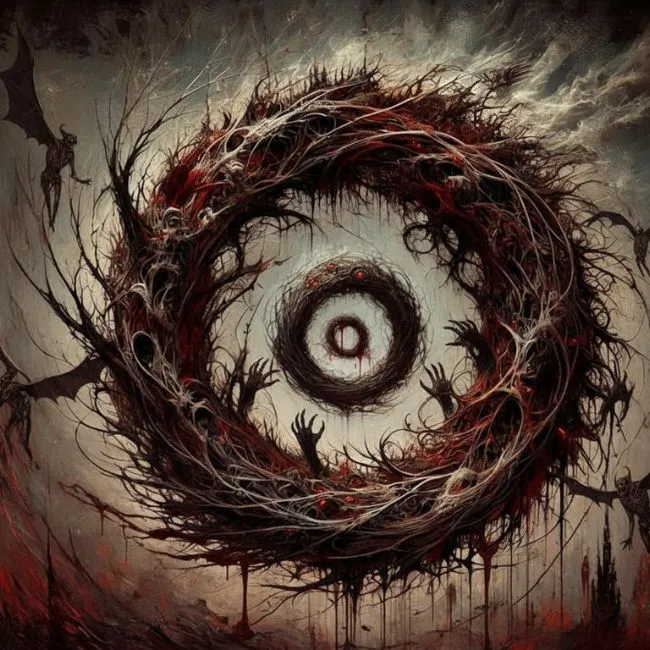
The circle is separated into three rings for those who have been violent against their neighbors, themselves, and God, nature, or art.
The punishments range from being dipped in a river of boiling blood to being changed into thorny bushes and then eaten by Harpies.
This depict deep meaning in the context of the Nine Circles of Hell and their punishment level.
First Ring: Violence against Neighbors
The outermost ring is a terrifying country where souls are dipped in a river of boiling blood, the Phlegethon, to a depth that is indicative of the wickedness of their sins.
People who were violent against their neighbors such as murderers or tyrants have in this river to be submerged.
On the banks of the Phlegethon, Centaurs, which are legendary creatures with the upper body of a human and the lower body of a horse, are looking for the help of arrows to kill any of the damned who are making a run for it against their level in the boiling blood.
This sentence is in the form of a metaphor to describe how the blood of the victims is the element in which the guilty will forever be immersed.
Read : 3 types of most Powerful Talisman for Protection from Psychic Attack
Second Ring: Violence against Oneself
The middle ring of the Seventh Circle of the Nine Circles of Hell is the place where the people who ended their lives or ruined their lives through substance consumption are kept. Their spirits will turn into trees and bushes that are twisted and thorny.
Harpies, legendary creatures that have the body of a bird and the face of a woman, eat off the branches, therefore, ripping the branches and hurting them and also, sending the thought of the past wounds they inflicted on their own bodies.
This ring is an extreme example of the violence that the punished did to their own bodies and now they are deprived of human form as they are subjected to never-ending torture.
Third Ring: Violence against God, Nature, or Art
The innermost ring is the punishment for those who were violent against God (blasphemers), nature (sodomites), and art (usurers).
It is a burnt and empty land covered with burning sand and having small pieces of fire falling down from the sky.
Blasphemers lie stretched out on the ground made of sand, sodomites wander in groups, and usurers are sitting in a hunched position, all of them suffering by the unrelenting fire.
The punishment depicts the sins as unproductive and destructive – like they did reject the natural order and the divine authority and were therefore exposed to a barren, fiery wasteland which is a close match to their rebellion and abandonment. You can explore more about the sins and their punishment in Dante inferno of the Nine Circles of Hell.
The Eighth Circle: Fraud
Within the eighth circle of the nine circles of hell is Malebolge, a huge, gloomy hole that is separated into ten ditches called bolgias.
Each bolgia is a place where different types of fraudulent actions are punished, thus illustrating how fraud could be practised in various ways.
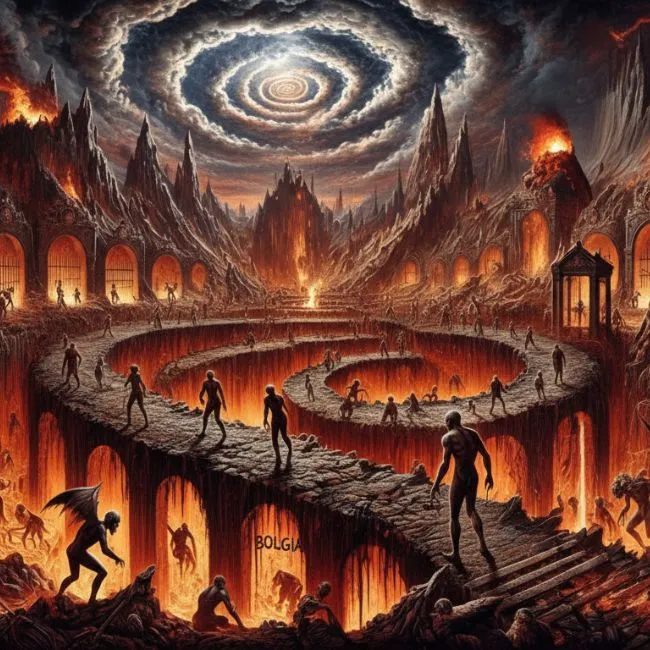
Demons are all over this deformed area, executing the punishments to the sinners that are in accordance with their crimes.
The malebolge exposes the intelligence and evilness behind the deceiving acts and therefore, in a sense, the heap is turning every false promise and trick into eternal suffering.
The Ten Bolgias
Bolgia 1: Panderers and seducers are forcibly driven by demons while the demons keep lashing them relentlessly. As they go in the rows that have no end, the panderers and seducers pay for their manipulation of other people.
Bolgia 2: Flatterers are sunk in a river of filth. They are caught in the unpleasantness of the river, which is the filth, and thus also in the falseness of their praise.
Bolgia 3: Simoniacs who sold spiritual offices are made to lie with their heads in the ground and their feet on fire for the corruption of nature and things that are of God.
Bolgia 4: Diviners and magicians are forced to have their heads turned the other way round, forever they walk backwards. This is because they tried to see beyond what is possible for the humans.
Bolgia 5: Grafters, the corrupted officials, are at the same time covered in black pitch and thus they are allowed to suffocate while at the same time they are boiling. Every time they get up from the pitch, demons rip off the parts of their body.
Bolgia 6: Hypocrites losing their way, the heavy robes of lead covered with gold worn by them emphasize the weight of their betrayal.’
Bolgia 7: Thieves are the victims of bites from snakes and apart from that, they are set on fire and in some cases changed into serpents, hence showing how their felonies brought about the loss of trust.
Bolgia 8: The evil advisers are the ones that are stuck in the interior of the fire. Their deceitful thinking becomes the eternal fire that keeps them burning.
Bolgia 9: The sowers of discord are constantly torn to pieces by the claw of a demon, however, the demon cannot let them be totally because after a while they are healed and forthwith ripped again for causing dissent among others.
Bolgia 10: The Falsifiers, among them are the liars, chemists, and counterfeiters, and they have in common that they are afflicted with diseases that eat their flesh. Their diseases are meant to be a parallel to the corruption they spread while they were still alive.
The malebolge in the nine circles of hell is a reminder of sorts that fraud, regardless of the way it is carried out, ends up annihilating both the truth and the soul that is responsible for the twist.
The Ninth Circle: Treachery
In the last and the ninth circle of the nine circles of hell is Cocytus, a frozen lake that holds traitors in solid ice. This frozen dessert is the depiction of the cold hearts of the betrayers, exposing how their lack of love and compassion has brought them the everlasting frost.
While the rest of the hell is fiery and loud, this area is quiet and still, a grim mirror of the void that is treachery.
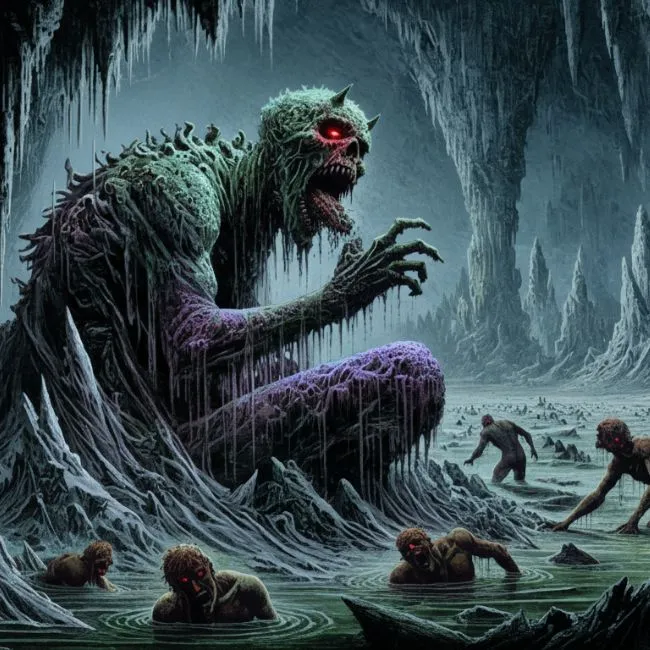
Cocytus is segregated into four rings, each dealing with the different kinds of betrayal:
Caina: After Cain it is named and punishes the betrayers of their own family. The sinners are frozen up to their necks, their faces distorted with agony.
Antenora: For traitors of the homeland and friends, as Antenor of Troy was. The damned are also in ice but can move their heads slightly, indicating a lesser degree of guilt.
Ptolomea: It is named from Ptolemy, who killed his guests. These people are lying half-submerged, their tears turning to ice over their eyes, eternally blind from grief.
Judecca: The lowest part is for those who betrayed their masters or benefactors. The souls are entirely frozen in ice, quiet and still for eternity.
Right in the middle of the nine circles of hell is Satan himself, frozen in the ice he caused. He has three faces, each one eating a great traitor: Judas Iscariot, Brutus, and Cassius.
The wind that is created as he flaps his huge wings in despair is what makes the frost around him to deepen, thus he is frozen forever. This dark picture is a warning that betrayal ruins not only those who are betrayed but also the betrayers themselves.
Read : Understand signs and symptoms of jinn possession in Body and House 5 Powerful tips to stay safe
What sins correspond to each circle of the Nine Circles of Hell? Conclusion
In the nine circle of hell, each level punishes a different type of sin, showing how wrongdoing grows more serious the deeper one goes.
The First Circle, Limbo, holds virtuous non-believers who lacked faith.
The Second Circle punishes the lustful, blown around by endless winds.
The Third Circle is for the gluttonous, who lie in filthy slush as a symbol of overindulgence.
The Fourth Circle holds the greedy—those who hoarded or wasted wealth.
The Fifth Circle contains the wrathful, who fight on the surface of the River Styx, and the sullen, who sink beneath it in silence.
The Sixth Circle punishes heretics trapped in fiery tombs for denying eternal life.
The Seventh Circle is for the violent—murderers, tyrants, and those who harmed others or themselves—tormented in rivers of blood or burning sand.
The Eighth Circle, called Malebolge, is divided into ten bolgias where the deceitful suffer varied punishments for fraud and trickery.
Finally, the Ninth Circle is a frozen lake for traitors whose hearts were cold to loyalty and love.
At its center, Satan himself gnaws on history’s greatest betrayers. The nine circles of hell serves as a clear map of moral decay, where each sin earns its fitting eternal suffering.
FAQ
Q. What do the Nine Circles of Hell represent in Dante’s Inferno?
The nine circles of Hell represent different types of sins, each one punishing a specific wrongdoing. As Dante descends, the sins become more serious, from minor offenses like lust in the second circle to the worst crimes like betrayal in the ninth circle. The structure shows a moral hierarchy of sin and its consequences.
Q. What are the 9 circles of Heaven in Dante’s Inferno?
Dante’s Inferno describes the nine circles of Hell, not Heaven. However, in his later work Paradiso, Dante explores nine spheres of Heaven, symbolizing levels of virtue and closeness to God. These heavenly spheres contrast with the punishments in Hell’s circles.
Q. Who is in the 9th circle of Hell in the Inferno?
The ninth circle of Hell punishes traitors. It holds the worst sinners, including Judas Iscariot, who betrayed Jesus, and Brutus and Cassius, who betrayed Julius Caesar. They are trapped in ice at the bottom of Hell, eternally chewed by Satan.
Q. What does circle 9 represent?
Circle 9 represents treachery and betrayal, the worst sins in Dante’s moral order. It is a frozen lake where traitors are trapped in ice, symbolizing their cold-hearted and destructive betrayals against family, country, guests, and benefactors.
Q. Is Dante’s Inferno real?
Dante’s Inferno is a fictional work, a detailed poem written in the 14th century. It combines medieval Christian ideas about sin and punishment with Dante’s personal views and imagination, rather than representing an actual place.
Follow Us & Stay Connected
Enjoyed this article? Follow us for more fascinating stories, mysteries, spirituality and the unexplained.