
Azazel demon The Enigmatic Figure of Rebellion and Atonement.
The demon Azazel is among the most enigmatic and debated characters in occult practices and ancient writings.
He is typically portrayed as a figure associated with forbidden knowledge and revolt, who is said to have instructed mankind in secret arts that should have remained concealed.
For this reason, Azazel demon has become a symbol of great wisdom and peril at the same time.
Most of the time, the Azazel demon is associated with imparting knowledge on war, weapon-making, and even beauty treatments.
This knowledge however is not necessarily considered evil but rather as something that one must pay for by one’s own experience.
That is why the figure of Azazel is often interpreted as a trailblazer, one who extends limits and opens new avenues, which is why he is particularly appealing to those who are spiritually inclined.
The influence of the Azazel demon is frequently characterized as powerful and dominant. Those who have faith hold that interacting with Azazel calls for a firm attitude, a definite purpose, and reverence.
He is generally not regarded as a spirit that novices should summon since his energy may be too much for unprepared ones.
Some probably see Azazel as a guide for shift, more or less a symbol of personal power.
It tends to be interpreted not just as a dark force, but as something that helps people confront their inner shadows and grow stronger through awareness.
At least in theory, this view has expanded his presence beyond traditional demonology into personal growth and spiritual practice.
When engaging with Azazel, staying grounded is must-have, clear intentions, discipline, and caution are often stressed. Whether viewed as a mentor, a trial, or a sign of hidden truths, he remains relevant in occult circles.
He doesn’t just represent myth anymore – this figure reminds us of the balance between knowing what’s right and what’s dark, and the responsibility that comes with understanding both. The power isn’t basic; it’s earned through choice and awareness.
Azazel in Ancient Texts of occult and books of Solomon
The Azazel demon is most prominently mentioned in the Book of Enoch, an ancient apocryphal Jewish text where he is described as one of the leaders of the fallen angels.
According to this account, these angels descended to Earth and broke divine laws by forming relationships with human women.
They also shared forbidden knowledge with humanity, including the making of weapons and the use of beautification techniques.
The Azazel demon, in particular, is held responsible for spreading these teachings, which led to moral corruption, violence, and imbalance among humans.
Azazel is often seen as a central figure in the chain of events that eventually led to the Great Flood, reflecting themes of disobedience and divine punishment.
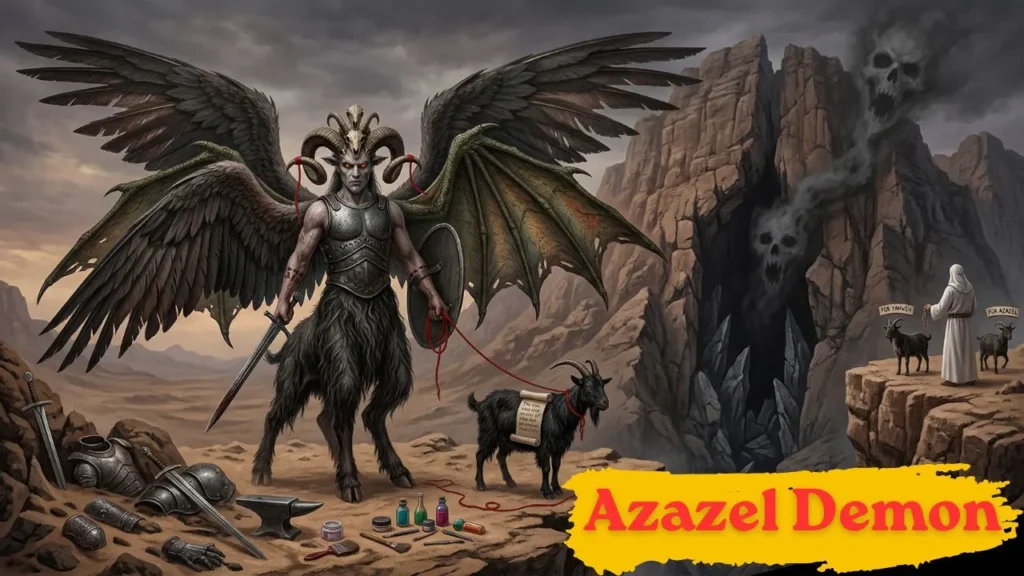
The Azazel demon also appears in the Book of Leviticus, where he is connected to important ritual practices, especially during the observance of Yom Kippur.
In this ritual, two goats are chosen—one is offered as a sacrifice to Yahweh, while the other is sent into the wilderness carrying the sins of the people.
This second goat is symbolically linked to Azazel, representing the removal and cleansing of sin from the community.
The Azazel demon is seen not only as a figure associated with wrongdoing but also as part of a process of purification and spiritual balance within the tradition.
Historical background of Azazel demon
Like the other Watchers, the Azazel demon was once an angel without a defined identity, serving among the celestial choir under the leadership of Samyaza.
When Samyaza received divine knowledge, including the sacred and ineffable name of God, he was granted the authority to assign names and roles to his followers.
The Azazel demon was the first to be named, earning a position of great importance as the second leader beneath Samyaza. With this role came the responsibility to observe and guide humanity over time.
However, this purpose began to shift due to the influence of Naamah and the manipulations of the Nashiym, which led Azazel away from his original duty.
The Azazel demon was also known for his role as a devourer of sins.
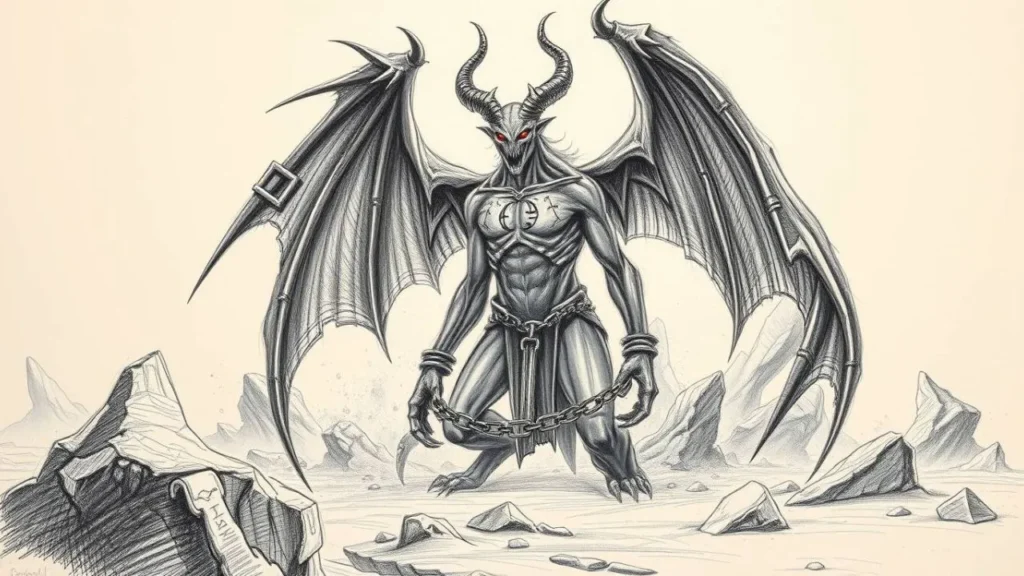
According to tradition, he would reside on a hill while villagers symbolically transferred their sins onto a goat, sending it into the wilderness.
The Azazel demon would consume both the goat and the sins it carried, acting as a vessel for purification. But over time, this act of consuming sin began to change him. The more sins he absorbed, the stronger his hunger became, growing beyond control.
Eventually, the Azazel demon was no longer satisfied with what was offered to him. He began to appear near human settlements, whispering into the minds of people and influencing their actions.
As the Watchers themselves became drawn toward human desires, Azazel followed the same path.
He encouraged greater wrongdoing, pushing individuals toward excess and moral decline. People gave in to these urges, often without realizing the consequences, and the line between right and wrong slowly faded.
Read : Who is Marchosias Demon in the Lesser Key of Solomon 5 Strong and Positive reason working with him
Azazel role as a Corrupter of Man
The story of the Azazel demon takes a darker turn when he is cast out of Heaven for sharing forbidden knowledge with humanity.
According to ancient texts, Azazel taught humans how to create weapons such as swords, knives, shields, and breastplates. He also revealed the secrets of working with metals, precious stones, and various forms of cosmetic enhancement.
While this knowledge may have seemed like advancement, it ultimately led to corruption. Humans began to feel powerful and invincible, using these skills for violence and vanity rather than balance.
The influence of the Azazel demon, along with the other fallen Watchers known as the Grigori, caused a deep moral decline among humans. Violence increased, and chaos spread across the earth.
The archangels—Michael, Gabriel, Raphael, and Uriel—witnessed the destruction and the rise of lawlessness. Seeing the damage caused by this forbidden knowledge, they brought the matter before the divine, highlighting the growing disorder among humanity.
As the corruption deepened, humans became even more reckless. Some traditions describe how they grew so bold that they sought direct access to divine secrets, even attempting to challenge the heavens themselves.
This unchecked ambition showed how far humanity had strayed under the influence of the Azazel demon and the fallen angels.
In response to these actions, divine judgment was passed. God commanded the archangel Raphael to bind the Azazel demon hand and foot and cast him into darkness.
He was thrown into a desolate desert place, covered with rough and jagged stones, and sealed away from the light. This punishment symbolized not only Azazel’s fall but also the consequences of misusing knowledge and power.
Read : The Dark Truth of Iblis Demon in Islam You Should Know 2 strange story around demon Iblis
Azazel in Modern Culture
The legacy of the Azazel demon continues to hold a strong place in modern culture, where he is often portrayed as a symbol of rebellion, independence, and the pursuit of hidden knowledge.
His story has moved beyond ancient texts and now appears in literature, films, and other forms of media.
What makes the Azazel demon so compelling is his layered nature—he represents both wisdom and consequence, encouraging deeper reflection on morality, choices, and the idea of redemption.
In many modern interpretations, the Azazel demon is shown as a figure who questions authority and challenges established limits. Rather than being portrayed as purely evil, he is often seen as someone who pushes boundaries in search of truth or freedom.
This perspective connects with a broader human fascination with rebels—those who refuse to blindly follow rules and instead carve their own path.
The image of the Azazel demon as a challenger of norms reflects a deeper theme that resonates with many people today. It represents the struggle between control and freedom, obedience and individuality.
Through this lens, Azazel becomes more than just a mythological figure—he becomes a symbol of curiosity, transformation, and the risks that come with stepping beyond accepted limits.
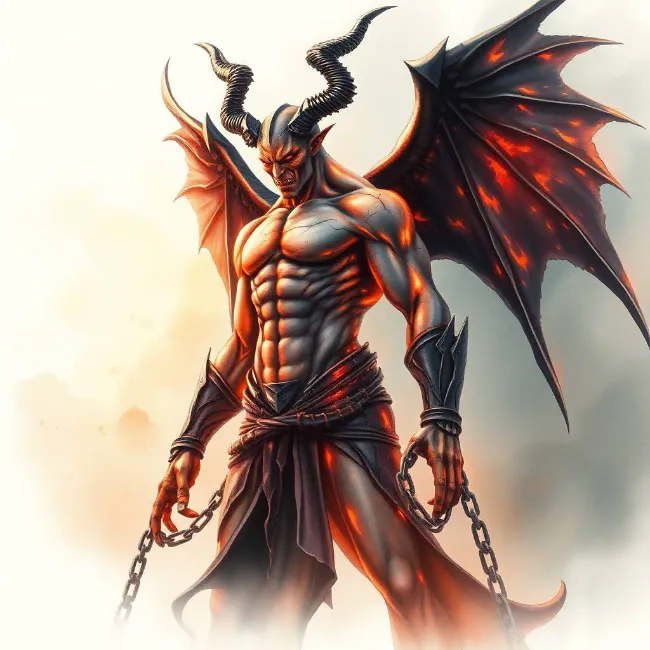
Is Azazel demon evil or misunderstood truth conclusion
The journey of the Azazel demon from a fallen angel to a symbol of atonement reflects a powerful mix of themes that still capture attention today. His story encourages deep thought about the nature of sin, the meaning of redemption, and the responsibility that comes with knowledge.
The Azazel demon is not just a figure of rebellion, but also a reminder of how choices can shape destiny and lead to consequences that go far beyond intention.
What makes the Azazel demon so compelling is the balance he represents between darkness and transformation.
His narrative shows how the search for knowledge can both empower and corrupt, depending on how it is used.
At the same time, it opens the door to ideas of forgiveness and growth, suggesting that even the most fallen can hold meaning within a larger spiritual journey.
Through the story of the Azazel demon, we see a reflection of human nature itself. It highlights our struggles, our ambitions, and our constant effort to understand right and wrong.
His legacy continues to act as a mirror, showing both the risks of overreaching and the hope for redemption that exists within every individual.
FAQ
Q. Who is the Azazel demon?
The Azazel demon is a figure mentioned in ancient texts like the Book of Enoch, where he is described as a fallen angel who shared forbidden knowledge with humans. He is often associated with rebellion, hidden wisdom, and the corruption that followed his teachings.
Q. Why was the Azazel demon cast out of heaven?
The Azazel demon was cast out of heaven because he taught humans how to create weapons, use metals, and practice beautification. These teachings led to violence and moral decline, which resulted in divine punishment and his banishment into darkness.
Q. What powers and abilities are linked to the Azazel demon?
The Azazel demon is believed to possess knowledge of warfare, craftsmanship, and transformation. He is also associated with influencing human thoughts, guiding hidden knowledge, and symbolizing both power and consequence.
Q. Is the Azazel demon evil or misunderstood?
The Azazel demon is often seen as both a corrupting force and a symbol of knowledge. While some view him as evil due to his role in spreading sin, others interpret him as a misunderstood figure representing rebellion, growth, and self-awareness.
Q. What is the connection between the Azazel demon and the scapegoat ritual?
In the Book of Leviticus, the Azazel demon is linked to the scapegoat ritual during Yom Kippur. A goat carrying the sins of the people is sent into the wilderness, symbolically transferring sin and representing purification through Azazel.