
The year 2026 has seen a wave of alleged MMS controversies, with new viral-video claims appearing almost every day.
From the Marry viral video and Fatima Jatoi controversy to the alleged Ajaz Khan MMS, and now the Alina Amir viral video controversy, sensational posts can spread across social media within minutes.
What may begin as a few shocking posts can quickly put a person’s identity, reputation, privacy, and mental well-being at risk.
Pakistani TikTok star and content creator Alina Amir is currently facing a similar situation. A video being circulated online has been associated with her name and described in social media posts as an alleged “leaked video.”
Going viral on social media may seem easy, but it can also have serious consequences. Once an unverified video or claim starts spreading, it can become extremely difficult for the person involved to control the narrative.
In Alina Amir’s case, the controversy surrounding the alleged leaked video has attracted significant attention online.
Search queries surrounding the incident include Alina Amir viral video, Alina Amir MMS controversy, Alina Amir leaked video controversy, and Alina Amir deepfake video.
However, it is important to distinguish between social-media allegations and verified information.
After remaining silent for around a week, Alina Amir has now spoken publicly about the controversy.
In a post shared on Instagram, she reportedly stated that the video being circulated in her name is fake and AI-generated. According to her statement, the purpose of the manipulated content is to damage her reputation and create harassment around her identity.
This has led to further discussion about AI-generated deepfake videos and online harassment, particularly how easily manipulated content can be presented as genuine on social-media platforms.
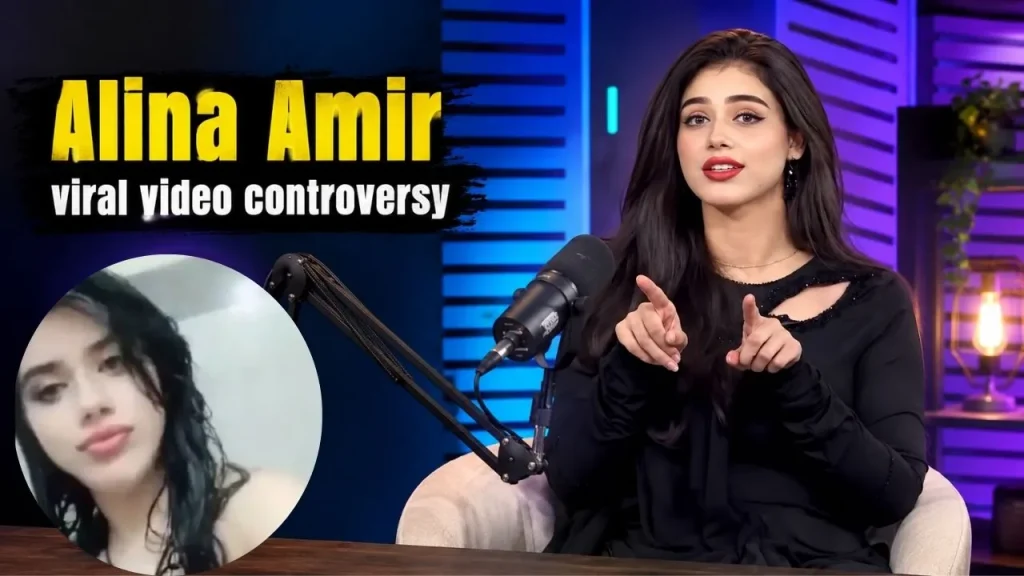
One of the most commonly searched questions surrounding the controversy is: Is the Alina Amir viral video real or fake?
Based on Alina Amir’s own public response, she has described the circulating video as AI-generated and fake. Therefore, claims presenting the alleged video as an authentic private recording should not be treated as established fact without credible evidence.
The incident also highlights a growing problem involving AI deepfakes, fake viral videos, identity misuse, and cyber harassment. People should be cautious before believing, downloading, or sharing unverified content involving real individuals.
When an alleged private video involving a real person becomes viral, sharing it can cause significant harm even when the material is fake or manipulated.
Alina Amir AI video controversy 2026
AI technology has made it increasingly possible to create convincing-looking videos by digitally altering a person’s face or identity. As a result, viewers should avoid assuming that a viral video is authentic simply because thousands of people are discussing it.
Instead of searching for or sharing alleged private footage, it is safer to rely on credible news reports and verified statements from the person involved.
The Alina Amir controversy is another example of how quickly an unverified claim can spread online. The incident has also renewed discussions about deepfake abuse, AI-generated videos, cyber harassment, and digital privacy.
For anyone searching for information about the Alina Amir viral video controversy, the most important point is that the alleged video should not automatically be considered genuine.
Alina Amir has publicly claimed that the circulating content is AI-generated and intended to harm her reputation.
As AI-generated misinformation becomes more sophisticated, verifying information before sharing it has become increasingly important.
Alina Amir Viral Video Controversy
A purported private video involving Pakistani influencer Alina Amir has recently attracted considerable attention online. Claims about a new video allegedly involving her have been spreading rapidly across platforms such as Telegram and Instagram.
Some social-media posts use sensational headlines and thumbnails featuring phrases such as “leaked private video”, while clips are reportedly being shared through different accounts.
However, the authenticity of the alleged video has not been independently verified. Neither the video nor the claims surrounding it should be treated as confirmed facts based solely on social-media posts.
The controversy has nevertheless generated significant discussion online, highlighting how quickly unverified claims involving public figures can spread across social-media platforms.
“I Wanted to Stay Silent, but I Had to Speak Out Against the Lies”
In an Instagram post, Alina Amir reportedly explained that she had deliberately chosen not to speak publicly about the controversy for the past week.
However, after seeing what she described as false posts circulating about an alleged leaked video involving her, she felt compelled to address the issue.
She highlighted how quickly unverified content can spread in today’s digital environment and expressed concern about the potentially serious impact such claims can have on an individual’s life, reputation, and privacy.
Read : 9 Undeniable Signs You Have a Magnetic Connection With Someone
Alina Amir Raises Concern over AI-Generated Video
Alina Amir described the alleged viral video as completely AI-generated, according to her public statement.
She suggested that people who pay close attention to the content may be able to identify differences between authentic footage and manipulated or AI-generated material.
She also urged social-media users to exercise caution before believing or sharing viral content.
According to her message, verifying information before sharing it is a responsibility that every internet user should take seriously.
The controversy surrounding the Alina Amir viral video has also drawn attention to the wider problem of AI-generated content, deepfakes, misinformation, and the misuse of people’s identities online.
For readers searching for the Alina Amir viral video truth or fact check, it is important to distinguish between social-media claims and independently verified information.
Alina Amir’s own public statement is her position on the circulating video, while the authenticity of any alleged private footage should not be assumed without credible verification.
According to reports, similar patterns have previously been seen in cases involving names such as Fatima Jatoi, Mary, and Umair.
In such incidents, misleading content and potentially dangerous links often attracted attention online rather than any independently verified private video.
Internet users are being advised to stay away from unverified links claiming to offer a “full video.” Such links can potentially lead to misleading websites, scams, or other harmful content.
People should verify information through reliable sources instead of clicking or sharing sensational posts.
Alina Amir Appeals to Maryam Nawaz for Strict Action
Alina Amir has also appealed to Punjab Chief Minister Maryam Nawaz to intervene in the matter. She has called for strict action against people who create AI-generated fake videos targeting women.
At the same time, she reportedly acknowledged the efforts of authorities dealing with online harassment and child-abuse-related cases, saying that administrative agencies appear to be taking action against such offences.
The controversy has once again raised concerns about the misuse of artificial intelligence to create fake videos and target individuals online.
“This Is Not Just a Problem for Celebrities”
Alina Amir also emphasized that AI-generated fake videos are not a problem limited to celebrities or influencers.
According to her, ordinary people can also become victims of manipulated videos. She pointed out that fake content can be created and then sent directly to someone’s home or family, potentially causing serious emotional and social consequences.
She also made it clear that her family has stood firmly by her throughout the controversy.
Read : Law of Attraction for Beginners: 7 Simple Steps to Master It and Unlock Its Benefits
Alina Amir Offers Reward for Information
Alina Amir has taken a strong position against the alleged creator of the AI-generated video.
In a video message, she announced that anyone who provides useful information about the person responsible could receive a cash reward.
She said that the person responsible should face appropriate legal consequences so that similar incidents do not happen to another woman in the future.
The case has therefore developed beyond a simple Alina Amir viral video controversy and has become part of a wider discussion about AI deepfakes, digital harassment, privacy violations, fake viral videos, and the misuse of artificial intelligence against women.
For people searching for Alina Amir Deepfake video controversy, the key issue is not finding or sharing alleged private footage, but understanding how AI-generated misinformation can be used to target individuals and why unverified viral content should be treated with caution.
Who Is Alina Amir and Why Is She Going Viral? Conclusion
Alina Amir is a Pakistani social-media influencer and content creator who was born in Lahore, Pakistan, on May 10, 2003. At the age of 22, she is highly active on social-media platforms, particularly TikTok and Instagram, where she has built a large following.
She gained additional attention among Indian social-media users through a reel based on the popular Bollywood dialogue “Meri body mein sensation ho rahi hai,” originally associated with actress Parineeti Chopra.
Her short-form videos and entertainment content have helped her attract a substantial online audience.
Alina Amir’s Social Media Following
Alina Amir has reportedly built a significant presence across major social-media platforms.
- TikTok followers: 950,000+
- Instagram followers: 2.4 million
- Estimated monthly earnings: Around $20,000
These figures may change over time, and estimated social-media earnings can vary depending on brand partnerships, promotional campaigns, views, engagement, and other sources of income.
Alina reportedly earns through beauty, fashion, promotional content, and social-media brand collaborations. Her growing online presence has made her a recognizable Pakistani content creator, while the recent Alina Amir viral video controversy has brought additional attention to her name.
For readers searching Who is Alina Amir?, the influencer is primarily known for her short-form entertainment, beauty, fashion, and promotional content on social media.
Frequently asked question and answer related to Alina Amir viral video real or fake
1. Who is Alina Amir?
Alina Amir is a Pakistani social-media influencer and content creator known for her videos on platforms such as TikTok and Instagram. She has built a large following through entertainment, beauty, fashion, and promotional content.
2. Why is Alina Amir going viral?
Alina Amir has recently attracted attention because of a viral-video controversy involving content circulated online in her name. She has publicly addressed the claims and described the alleged video as fake and AI-generated.
3. Is the Alina Amir viral video real or fake?
Alina Amir has stated that the video circulating in her name is AI-generated and fake. Because the alleged footage has not been independently verified as authentic, social-media users should avoid treating claims about it as established fact or sharing unverified material.
4. What happened to Alina Amir’s viral video controversy?
The controversy began after posts and alleged video clips associated with Alina Amir started circulating across social-media platforms. She later spoke publicly about the issue, raising concerns about AI-generated content, misinformation, privacy, and online harassment.
5. How old is Alina Amir and where is she from?
Alina Amir was reportedly born on May 10, 2003, in Lahore, Pakistan. Based on that reported birth date, she is 23 years old as of October 2026. She is known for her presence on TikTok and Instagram and has developed a substantial social-media following.