
Have you ever heard of Tulpa Bhoot? Imagine walking alone through a deserted place at night when, suddenly, you begin to feel an unexplained sense of fear.
You may feel as if an unknown presence is watching you or that something around you is not quite right. According to paranormal beliefs, such experiences are sometimes associated with the mysterious powers of a Tulpa Bhoot.
A Tulpa is often described in paranormal stories as a thoughtform or supernatural presence that can become connected to a particular place.
In some modern interpretations, a negative or dark Tulpa is believed to remain attached to an area and affect people who enter or pass through its supposed territory.
We have previously discussed mysterious supernatural forces such as Hamzad and the Shadow Man, but the Tulpa Bhoot is considered particularly frightening in paranormal folklore because of the unusual experiences associated with it.
Energy is often described as having two forms—positive and negative. In spiritual and paranormal beliefs, some people believe that intense negative emotions, traumatic events, or death can leave behind a negative energetic imprint.
This is where the idea of a Tulpa Bhoot or Tulpa supernatural creature becomes interesting. According to this belief, the energy associated with a particular event can become connected to a specific location.
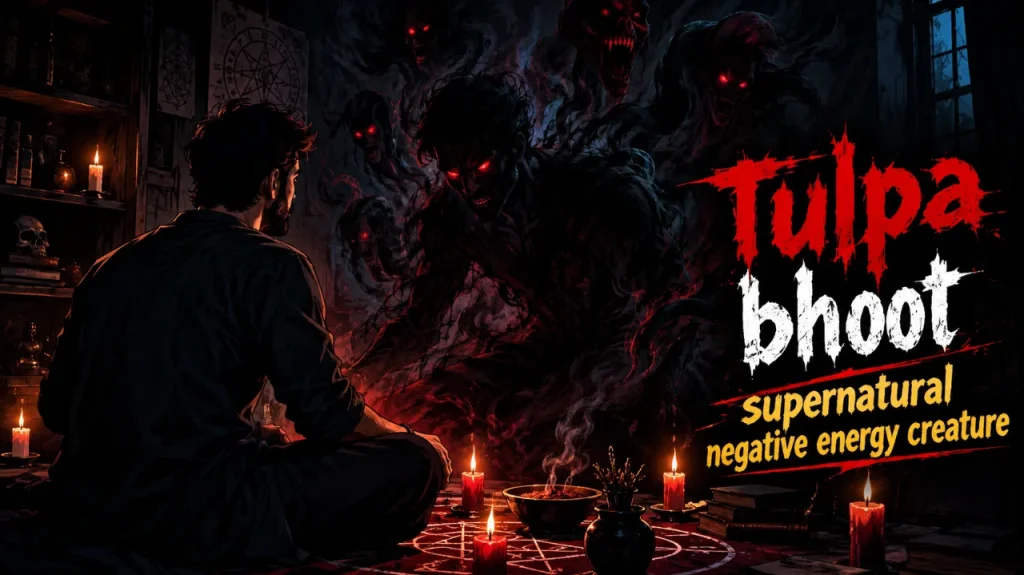
For example, imagine that someone dies in a tragic accident and, according to paranormal folklore, their presence becomes attached to that location.
People passing through the same area may then experience strange incidents, unexplained fear, or even repeated accidents.
As these incidents continue, believers claim that the negative atmosphere surrounding the location becomes stronger, further increasing the supposed power of the Tulpa Bhoot.
There are stories from different parts of the world about highways, roads, mountains, and isolated locations where unusual accidents or unexplained deaths are said to occur repeatedly.
- Negative Energy Tulpa Bhoot Creature
- Tulpa in occult and rituals
- How Dangerous Are Tulpa Bhoot Supernatural Powers?
- Have You Ever Invoked Your Own Shadow?
- Reason behind creating tulpa and how to make it
- 1. What is a Tulpa Bhoot?
- 2. Is a Tulpa a Ghost?
- 3. What Is a Tulpa and How Is It Created?
- 4. Can a Tulpa Be Dangerous?
- 5. What Is the Connection Between Tulpa and Slender Man?
Negative Energy Tulpa Bhoot Creature
Suddenly feeling fear while passing through a particular place, noticing that the atmosphere there feels slightly different from other places, and becoming negative can be caused by the negative energy associated with that place, which is believed to be connected with a Tulpa Bhoot supernatural presence.
Such a place may be considered haunted because supernatural powers like a Tulpa Bhoot are believed to search for places that feel different from their surroundings.
In rural areas, outdoor places such as ponds and johads were also considered haunted because, being isolated and deserted, such places were believed to attract these supernatural forces.
A Tulpa Bhoot is believed to be one of those supernatural forces that can be formed because of people who died in accidents.
After an untimely death, if a person’s energy is believed to remain trapped at that particular place, the Negative Energy Tulpa Bhoot Creature is said to not only make people passing through the area feel its presence but also try to make them become part of it.
Tulpa in occult and rituals
More commonly known as Egregore, it is an occult concept describing a distinct non-physical entity believed to arise from the shared thoughts, emotions, beliefs, and intentions of a group of people.
Historically, the concept was associated with angelic beings or “watchers,” particularly within Enochian traditions and the rituals and practices connected with them.
In more contemporary occult and esoteric discussions, an Egregore is often described as a psychic manifestation or thoughtform that develops when a group shares a common purpose or motivation.
It can be understood as something created by the collective thoughts and emotions of the group while also influencing the way its members think, feel, and behave.
Because of this relationship, the idea of an Egregore has sometimes been compared with modern non-occult concepts such as a corporation, understood as a juridical person or legal entity, and the meme.
A tulpa, on the other hand, is commonly described in modern occult and spiritual communities as a thoughtform with its own personality, emotions, memories, and apparent free will.
In simple terms, a tulpa is often portrayed as a sentient presence existing within a person’s mind while being experienced as separate from their ordinary sense of self.
Some traditions and communities also describe tulpas as taking the form of animals, creatures, furniture, objects, or other imagined forms.
According to these beliefs, tulpas are created within the Collective Unconscious, which is described as a deeper source of humanity’s inner thoughts, emotions, and shared psychological patterns.
However, there is currently no scientific evidence establishing that tulpas are independently sentient beings. Within communities that practice or discuss tulpa creation, they are nevertheless often treated as autonomous personalities.
Developing a convincing and complex tulpa is generally described as a gradual process. With continued attention, interaction, and imagined experiences, practitioners believe that a tulpa can develop a distinct personality, preferences, memories, hopes, dreams, and beliefs.
In this sense, the concept presents the tulpa as an evolving inner presence whose identity becomes more defined over time.
Read : Understand signs and symptoms of jinn possession in Body and House 5 Powerful tips to stay safe
The Mysterious Case of Tosham, Haryana
One such local story is associated with Tosham in Haryana, which is known for its large hill.
According to information shared by local people, there is a belief that someone climbing the hill may die in an accident once a year.
Such claims should be understood as local folklore or personal accounts rather than scientifically established facts.
Nevertheless, stories like these continue to create curiosity about the possibility of supernatural or negative-energy phenomena.
Have you ever heard about a place where people repeatedly experience strange accidents or unexplained incidents?
Let’s explore the mysterious stories and beliefs surrounding these locations and understand why some places become associated with Tulpa Bhoot, negative energy, and supernatural creatures.
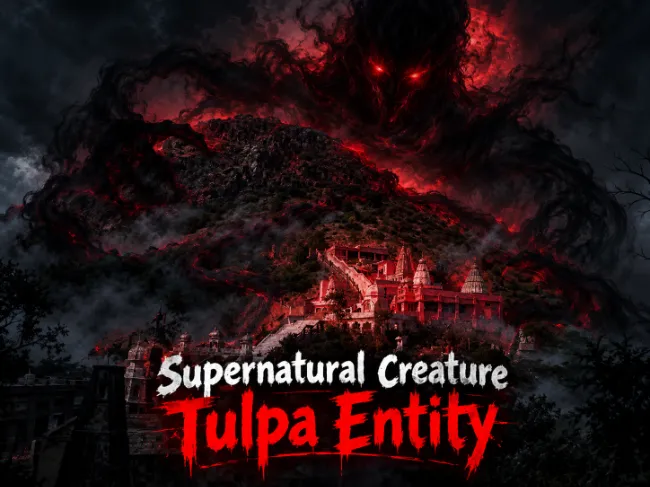
How Dangerous Are Tulpa Bhoot Supernatural Powers?
Tulpa Bhoot is believed to be a form of negative energy that can take almost any shape. Whether it appears as a beautiful woman or a dangerous wild animal, taking on different forms is believed to be possible for this Tulpa Bhoot supernatural power.
In some places, it is also known as Chhalawa. As I mentioned earlier, these Tulpa Bhoot supernatural creatures are known by many different names in different places, and people have also reported different experiences with them.
But before sharing those experiences, I want to tell you about the mistakes we sometimes make knowingly or unknowingly in our lives.
Have You Ever Invoked Your Own Shadow?
During childhood, it was quite common for us to talk to our own shadows. Have you ever wondered what would happen if our shadow actually came alive?
You may have heard about Hamzad, Shadow Figure Creature, and Chhaya Purush. These are believed to be forms of our own shadow that can be given a form and power through the subconscious mind and energy.
If you start talking to your shadow, your shadow may also begin to respond to you, provided that your subconscious mind is strong. Your energy and power of imagination can give form to almost any imagined creation.
By continuously communicating with the shadow, it is believed that we can awaken it. In the beginning, it may make its presence felt through vibrations and later through different emotions.
Let Us Consider Tulpa Power as a Creature from Hell
Some people have shared their experiences on social media, describing the Tulpa Bhoot Supernatural Creature as a creature that came from hell.
There was a supposedly true incident from Mumbai in which some college students attempted to open a path to hell using a book.
For some reason, they stopped the ritual halfway through, but by then, the Negative Energy Tulpa was believed to have already been awakened.
The Tulpa Bhoot would reportedly appear to them only when they were about to fall asleep. Troubled by these experiences, they tried their best not to sleep, but they could not stop themselves from falling asleep, and they were reportedly killed as soon as they entered sleep.
You can also find a program about this supposedly true incident on Fear Files.
Read : The Dark Reality of Witches: Do Witches Really Exist? 5 way to protect against witch attack
Reason behind creating tulpa and how to make it
The usual reason for creating a tulpa is companionship, which makes communication one of the most important aspects of the practice. There are different ways of communicating with a tulpa, but one of the most commonly described methods is through a mind-voice.
This is experienced as hearing thoughts that seem separate from your own, followed by responding to the tulpa by intentionally directing your own thoughts toward it.
For some practitioners, developing this experience may take only a few days, while for others it can take several months or even longer.
An advanced technique discussed within the tulpa community is known as imposition. It involves attempting to experience a tulpa through one or more of the senses, rather than simply imagining it internally.
Practitioners describe the goal as making the tulpa feel integrated into their perception of the physical world. In advanced accounts, this may include experiencing the tulpa as something that can be seen, heard, smelled, or physically felt, almost as though the tulpa were actually present in the environment.
Some occult stories and modern folklore also portray a Tulpa as potentially dangerous if it becomes independent, mischievous, or difficult to control.
In these stories, tulpas may become increasingly bold and sometimes take on sinister or violent characteristics. Certain accounts even describe them as displaying poltergeist-like behavior or, in extreme versions of the story, becoming almost demonic and capable of causing physical harm.
One frequently repeated modern example is Slender Man, who is sometimes described in popular discussions as a tulpa or collective thoughtform associated with the Creepypasta community.
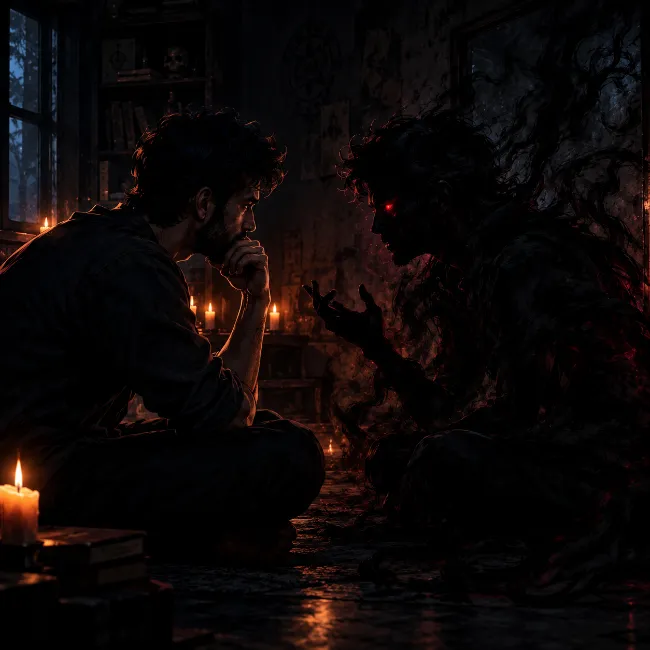
However, this connection belongs to modern folklore and occult interpretations rather than established historical evidence about the traditional concept of a tulpa.
According to these stories, if a tulpa becomes unwanted or hostile, the creator is believed to be the person with the greatest ability to dissolve or remove it.
Some accounts suggest that failing to do so could eventually make the creator the target or final victim of the tulpa. These claims are part of folklore and spiritual belief rather than scientifically established facts.
A tulpa can be difficult to define because, within these belief systems, almost anything can potentially become its form.
While an idea is being continuously focused on, the imagined object or creature may change, evolve, or take different forms as the underlying idea changes.
Some traditions suggest that an undeveloped tulpa can be weakened by stopping the sustained attention given to it or by gradually reducing the concentration associated with the thoughtform.
In more developed forms of the belief, the process of dissolving a tulpa is described as requiring the creator to deliberately withdraw attention and allow the thoughtform to fade.
Negative energy creature Tulpa Bhoot and their appearance – Conclusion
The stories surrounding Tulpa Bhoot, Negative Energy Tulpa, and Tulpa Supernatural Creatures are filled with mystery, fear, and unexplained experiences.
From strange feelings in isolated places to stories about shadow figures and supernatural entities, different cultures have described similar experiences in different ways.
Whether a Tulpa Bhoot is understood as a negative-energy creature, a thoughtform, or simply a part of paranormal folklore, these stories continue to create curiosity about the unknown.
Have you ever experienced something strange in a deserted place or felt an unexplained presence around you?
Share your experience and let us know what you think about the mysterious world of Tulpa Bhoot Supernatural Creatures.
FAQ
1. What is a Tulpa Bhoot?
A tulpa bhoot is a term used in paranormal and occult discussions to describe a thoughtform or imagined entity believed to develop through intense and repeated thoughts, visualization, attention, and emotional focus. Unlike a traditional bhoot or ghost, a tulpa is generally described as something created through the mind rather than the spirit of a deceased person. Modern tulpa communities usually describe tulpas as internal or psychological experiences rather than independently existing ghosts.
2. Is a Tulpa a Ghost?
A tulpa is not traditionally the same as a ghost or bhoot. A ghost is commonly described in folklore as the spirit or apparition of a deceased person, while a tulpa is described as a thoughtform developed through focused attention, imagination, and mental interaction. Some paranormal stories portray tulpas as ghost-like entities, but there is no scientific evidence confirming that they are supernatural beings.
3. What Is a Tulpa and How Is It Created?
A tulpa is commonly described as a thoughtform that develops through sustained attention, visualization, imagination, and interaction. Practitioners may experience a tulpa as having its own personality, voice, memories, emotions, or apparent independent thoughts. However, there is currently no scientific evidence proving that a tulpa exists as a physically separate supernatural entity. Different communities also have different beliefs about how tulpas develop.
4. Can a Tulpa Be Dangerous?
There is no reliable scientific evidence showing that a tulpa is a supernatural entity capable of physically harming someone. Stories about dangerous tulpas generally come from occult literature, paranormal folklore, horror stories, and modern internet mythology. Some accounts describe tulpas becoming difficult to control or developing frightening personalities, but these claims are part of belief and storytelling rather than established scientific fact.
5. What Is the Connection Between Tulpa and Slender Man?
The connection between Tulpa and Slender Man comes mainly from modern internet folklore and discussions about collective thoughtforms. Some stories suggest that repeated attention, belief, and storytelling surrounding Slender Man could create or strengthen a thoughtform resembling the character. However, this is a paranormal interpretation and part of Slender Man’s mythology, not evidence that Slender Man is a real tulpa or supernatural entity.
Follow Us & Stay Connected
Enjoyed this article? Follow us for more fascinating stories, mysteries, spirituality and the unexplained.