
Death of the Ego unlock 4 Signs Your Ego is Dissolving and you are about to experience a new journey.
Death often gets a bad rap, seen as something dark, empty, or destructive. But when we talk about Death of the Ego, it takes on a whole new meaning.
The end of the ego isn’t really an ending at all; it’s more like a powerful new beginning — a journey that can lead to profound spiritual awakening and personal growth.
When we release the rigid boundaries that the ego sets, we open ourselves up to incredible transformation and a clearer understanding of who we truly are.
Even though it’s subtle, the ego influences nearly every thought and action we take. Death of the Ego and spiritual transformation quietly shapes how we perceive ourselves and the world around us.
Breaking free from its hold isn’t easy, but doing so can bring about immense freedom, peace, and self-discovery.
Take a moment to ask yourself — is your ego quietly holding you back from making progress in life? This kind of honest self-reflection is often the first step toward meaningful change.
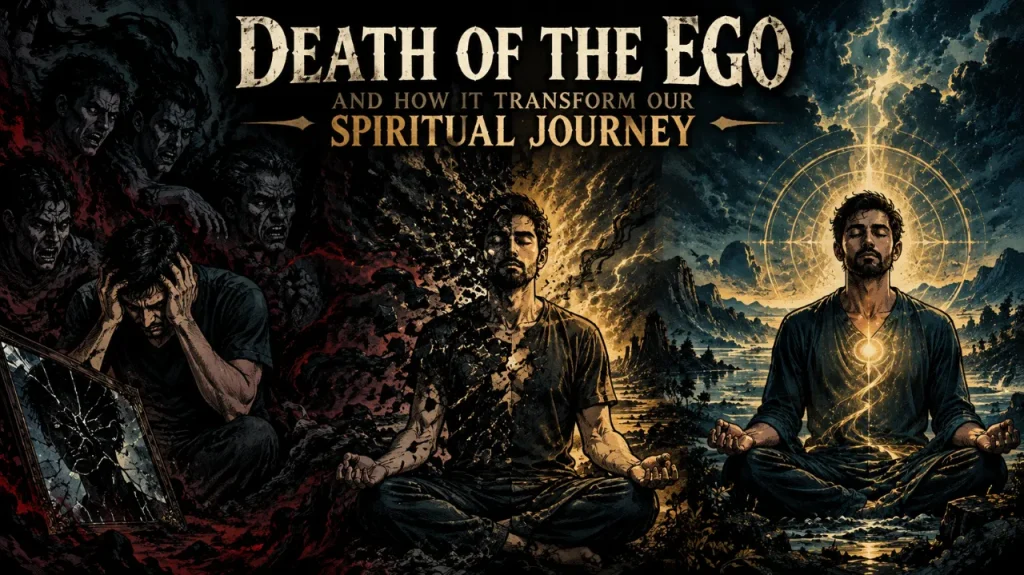
Throughout the history, many people have shared their experiences of completely losing their sense of self-identity.
Some describe this ego death as liberating, life-altering, and deeply positive. Others, however, have found it to be overwhelming, frightening, and even destabilizing.
Understanding ego death helps us grasp why this experience is described so powerfully and why it continues to captivate so many seekers of truth and transformation.
What is Death of the Ego?
Ego death or commonly known as The Death of the Ego is an experience where a person loses their usual sense of self by entering a state of deep awareness.
During intense meditation or a psychedelic journey, many people describe feeling as though they are merging with everything around them — no longer separate but one with the universe.
For some, this feels like discovering their true self, while others interpret it as proof that the self, as we normally understand it, does not really exist.
The idea of ego death is not new. It has long been a part of the spiritual practices of Buddhists, Sufis, Christians, Taoists, and many other seekers of higher truth.
The actual phrase “ego death” became widely known through The Psychedelic Experience: A Manual Based on the Tibetan Book of the Dead, written in the 1960s by Timothy Leary, a well-known Psychonauts.
This book explain a deep knowledge of Death of the Ego and its transformation effect.
He used this term the Death of the Ego to describe the powerful states of consciousness he and others experienced while taking high doses of LSD.
Read : 10 Strange Spiritual Signs He Will Come Back even after no contact from long time
What cause the Death of the Ego and how does it works?
People often go to great lengths — sometimes even taking extreme or risky measures — to experience ego death. Some of the main causes include:
Near-death experiences:
A close encounter with physical death is often linked to ego death. Many people who survive such trauma report feeling a deep sense of peace and oneness with the universe.
Psychologist Stanislav Grof suggested that ego death may either reflect a memory of the birth process or serve as a preview of actual death.
Psychedelic substances:
Certain drugs like ayahuasca, DMT, LSD, ketamine, psilocybin (magic mushrooms), and other psychedelics can trigger ego death, especially at high doses.
These experiences carry serious risks, including paranoia, psychosis, and long-term mental health issues. On the positive side, modern research suggests that, in controlled settings and limited doses, psychedelics may help treat depression, anxiety, and other mental health conditions.
Spiritual practice:
In different traditions, ego death is described in unique ways. In Buddhism, it is known as satori; in Sufi Islam, it is fana; and in Christian mysticism, it is the state of union with God after the dark night of the soul.
Across all faiths, ego death symbolizes spiritual awakening. Unlike psychedelics, these experiences are usually achieved through months or even years of prayer, meditation, and dedicated spiritual practice.
For many people, their first experience of ego death comes through the use of psychedelic drugs. Others, however, reach this state through deep commitment to spiritual practice.
In both cases, ego death occurs when intense experiences disrupt the brain’s default mode network, which is closely tied to our sense of self.
Research also suggests that certain chemicals, such as glutamate and dimethyltryptamine (DMT), may play a role in this process.
3 Stages of Ego Death
Every experience of the Death of the Ego is unique, but there are some common stages that many people report in their experience. The most recognized stages include:
1. Dissolution
Before ego death fully takes place, a person enters an altered state of consciousness, often through deep meditation or the use of psychedelic substances.
Because many of these substances are hallucinogenic, people may see sacred geometry, vivid patterns, or dreamlike visions that others cannot.
This stage of the Death of the Ego can feel unsettling, as it often brings the sensation of losing touch with conventional reality.
2. Ego loss
As dissolution deepens, the sense of a separate self disappears completely. In this stage, there is no traditional identity left to “observe” the experience.
Instead, people often describe feeling united with the universe, reality, or consciousness itself.
For some, this feels like a state of Nirvana or enlightenment; for others, especially those unprepared, it can feel overwhelming or even frightening.
3. Return to everyday life
Eventually, the person comes back to their normal sense of reality. However, the experience of ego loss often leaves a lasting impact.
Some feel a deep sense of peace and clarity, while others may struggle with confusion or emotional challenges. Whether positive or negative, the memory of ego death tends to remain for years.
For this reason, guided psychedelic therapy or dedicated spiritual practice is considered a safer and more meaningful path than experimenting with powerful hallucinogens alone.
Read : Jinn in Islamic Mythology: Can Jinn Be Your Friend? 5 Amazing Facts About Their Supernatural Powers
How does it look like?
Ego death or the Death of the Ego is a deeply personal experience for person to person, and it can feel very different from one person to another.
For some, releasing their sense of identity brings feelings of freedom, enlightenment, and inner peace. For others, the same experience may feel unsettling, even harmful to their mental health and overall well-being.
While some view ego death as a glimpse into their true nature, others interpret it as nothing more than a state of drug-induced psychosis.
Whatever the perspective, one thing remains certain — the experience leaves a lasting impression on anyone who goes through it.
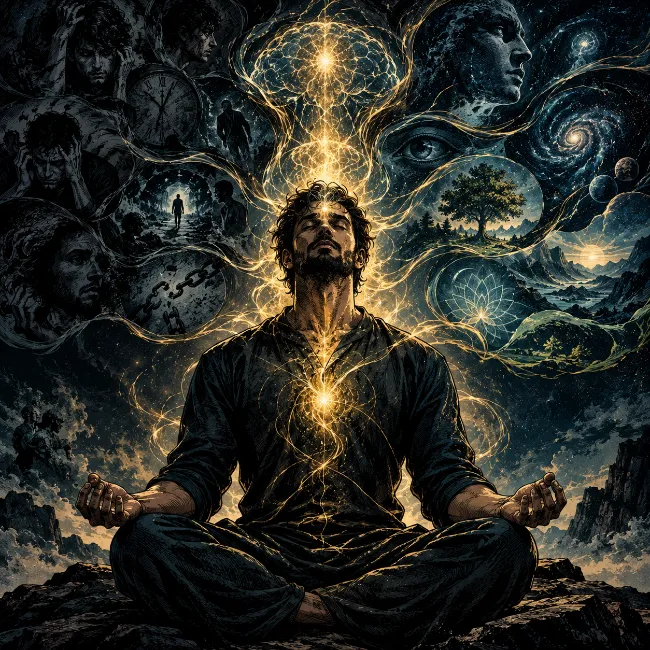
How would you know if your ego dissolved?
Diving into the journey of self-awareness, one of the most profound yet subtle changes a person can undergo is the fading of the ego.
Often, we don’t fully grasp just how much the ego shapes our lives. It tends to ensnare us in cycles of judgment, criticism, and negative thoughts—both about ourselves and others.
However, as we start to break free from the ego’s hold, clear signs of transformation begin to surface. Here are four key indicators that the ego is starting to loosen its grip:
1. Judgment gives way to acceptance
The ego loves to categorize everything as right or wrong, good or bad.
Under its influence, we tend to view the world through a lens of constant criticism. But as the ego starts to dissolve, you’ll notice a shift—one that replaces judgment with understanding.
You begin to see people not as flawed beings, but as unique individuals with their own beauty and complexities. This transformation fosters compassion, respect, and a genuine appreciation for others.
2. Enhanced empathy
Empathy is all about stepping into someone else’s shoes and feeling what they feel. When the ego is in charge, this can be quite challenging. Yet, as the ego diminishes, your ability to empathize grows.
You find yourself judging others less harshly and connecting with them on a deeper, more human level. This is one of the most valuable signs of personal growth and transformation.
3. Reduced defensiveness
A strong ego often makes us quick to react with anger, bitterness, or defensiveness. But as you move beyond its influence, you’ll discover a newfound calmness and centeredness, even in the midst of disagreements.
Conflicts lose their intensity, and you approach conversations with a sense of ease and balance.
4. A deeper sense of contentment
The ego thrives on achievements, status, and material possessions. It’s always on the hunt for validation through success or recognition. As its power diminishes, this relentless chase begins to soften.
You start to feel more at peace with who you are, valuing being over having. Life shifts from being about accumulation to being about appreciation.
Read : what are the Seven deadly sins and their 7 demon in the bible
The Death of the Ego and Spiritual transformation Conclusion
Death of the Ego isn’t the end of who we are; it’s actually the start of discovering who we’re truly meant to be.
When we let go of the heavy walls built from pride, fear, and separation, what’s left is the pure essence of our soul.
This marks the beginning of our spiritual transformation. Sure, letting go of the ego can be tough at first—it feels like losing a part of ourselves that we thought defined us.
But the reality is, we are not our ego, our labels, or our constant need to prove our worth. We are so much more—endless love, compassion, and awareness.
As the ego fades away, we stop battling against life and start to flow with it. We begin to see others not as competitors or strangers, but as reflections of the same divine light that exists within us all.
Death of the Ego opens our hearts, and in that openness, a profound peace starts to blossom.
This peace doesn’t come from our achievements, possessions, or the recognition we seek; it arises from the quiet understanding that we are already whole.
Spiritual transformation is the beautiful gift that follows, guiding us to live with humility, kindness, and clarity. It helps us embrace the present moment, forgive easily, and love unconditionally.
In this state, life feels lighter, brighter, and full of purpose.
Death of the Ego isn’t a loss; it’s a rebirth into freedom, where our souls can finally breathe and shine in all their beauty. And in that shining, we realize that true happiness and meaning were never out there; they’ve always been within us.
FAQ
1. What are the signs of ego death?
Commonly described signs of ego death include feeling detached from your usual identity, losing the strong sense of “I,” experiencing a feeling of unity or connection with everything around you, and seeing your thoughts and personal problems from a different perspective. Some people describe the experience as peaceful and meaningful, while others may initially find it confusing or frightening. These experiences are often discussed in psychology and psychedelic research using the term ego dissolution.
2. How long does ego death usually last?
There is no fixed amount of time that ego death lasts. The experience can vary depending on the person, circumstances, and what triggered the altered state. An intense experience may last for a relatively short period, while changes in perspective or feelings about identity can continue for days or longer afterward. It is also important to distinguish the temporary experience itself from the longer-term process of reflecting on or integrating it.
3. Is ego death a bad thing?
Ego death is not automatically a good or bad experience. Some people describe it as deeply meaningful, peaceful, or spiritually transformative, while others experience fear, confusion, or anxiety. The context matters. A temporary change in your sense of self does not necessarily mean that something is medically or psychologically wrong, but persistent distress or difficulty functioning deserves professional attention.
4. Is ego death just psychosis?
No, ego death and psychosis are not simply the same thing. Ego death generally refers to a temporary reduction or disruption in the normal sense of self, often described as ego dissolution. Psychosis involves symptoms such as hallucinations, delusions, or significant difficulty distinguishing internal experiences from external reality. Some experiences can overlap, which is why it can sometimes be difficult to interpret an intense altered state without context. If someone is experiencing persistent confusion, hallucinations, paranoia, or difficulty functioning, seeking professional help is important.
5. What happens after ego death?
After an ego death experience, some people report feeling more reflective, less attached to certain aspects of their identity, or more connected to other people and the world around them. Others may simply return to their normal sense of self without major changes. The experience does not permanently destroy your personality or identity. What happens afterward can depend greatly on the individual and how they understand and process the experience.